-
Eric Greitens hands the reins of state government over to his lieutenant governor Friday.
 May 30
-
What's in the next Illinois budget is more important to S&P Global Ratings than whether it is passed soon.
May 29
-
The covenant commits the state to four financial-restraint measures that lawmakers passed.
 May 24
-
Tax collections that came in below forecast reinforce the need for new tax revenues, said Elizabeth Muoio.
 May 22
-
The lawsuit says the state's plan to pay off oil producers by issuing bonds violates the state constitution.
May 18
-
Illinois Gov. Bruce Rauner submitted a capital appropriation for the project this week.
May 18
-
Phil Scott said his objections to new taxes in the $5.8 billion budget will bring a veto.
May 16
-
Gov. John Bel Edwards has called lawmakers to the capitol on May 22 to deal with the budget deficit.
May 16
-
New Jersey lawmakers want to complete sports gambling legalization to get new revenue for the state government and debt-ridden Atlantic City.
May 15
-
If New York State legalizes marijuana, New York City could see as much as $336 million annually in new tax revenue.
 May 15
-
Moody's sees minimal, but still credit positive, revenue effects for governments that tax legal cannabis.
May 14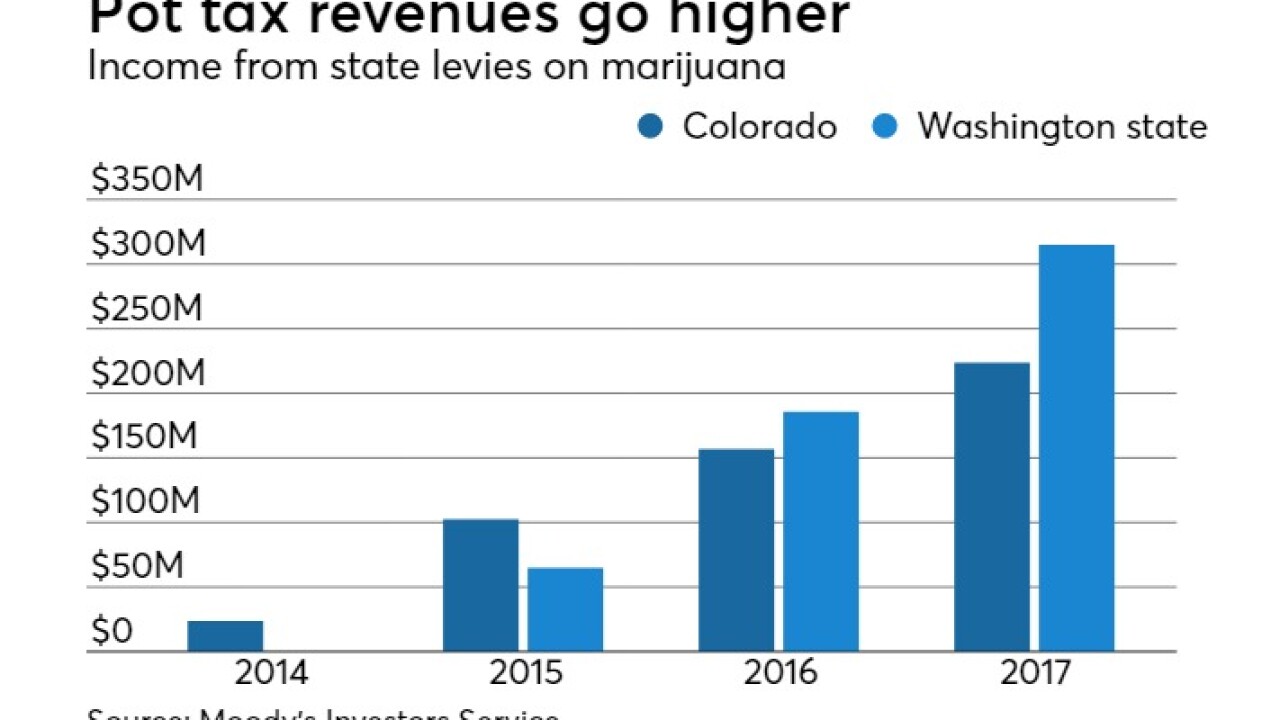
-
Gov. Jerry Brown unveiled budget proposals that bolster reserves and favor one-time costs.
May 11
-
Missouri's GOP-dominated legislature passed a budget, and plans a special session to consider disciplinary action against the first-term Republican governor.
May 11
-
Strong personal income tax revenues in California and Connecticut could be a harbinger for other states.
May 10
-
The $20.8 billion second-year adjustment to the biennial plan cleared 48 minutes before Wednesday's midnight adjournment deadline.
May 10
-
School districts and the Chicago Civic Federation slammed Gov. Bruce Rauner's budget plan Wednesday.
May 9
-
The flat state income tax rate is embedded in the state constitution.
May 8
-
Missouri lawmakers could move to remove their governor or take other punitive action.
May 4 -
Conning is holding firm to its declining outlook on states' credit quality, though S&P sees some rays of sunshine.
May 2
-
Gov. John Hickenlooper signed a $28.9 billion state budget.
May 1


