-
While claims are dropping slowly, levels remain higher than before the pandemic and could go up, according to analysts.
 July 9
-
Both the June jobs report and newest jobless claims report came in better than expected as the U.S. economy continues to improve.
July 2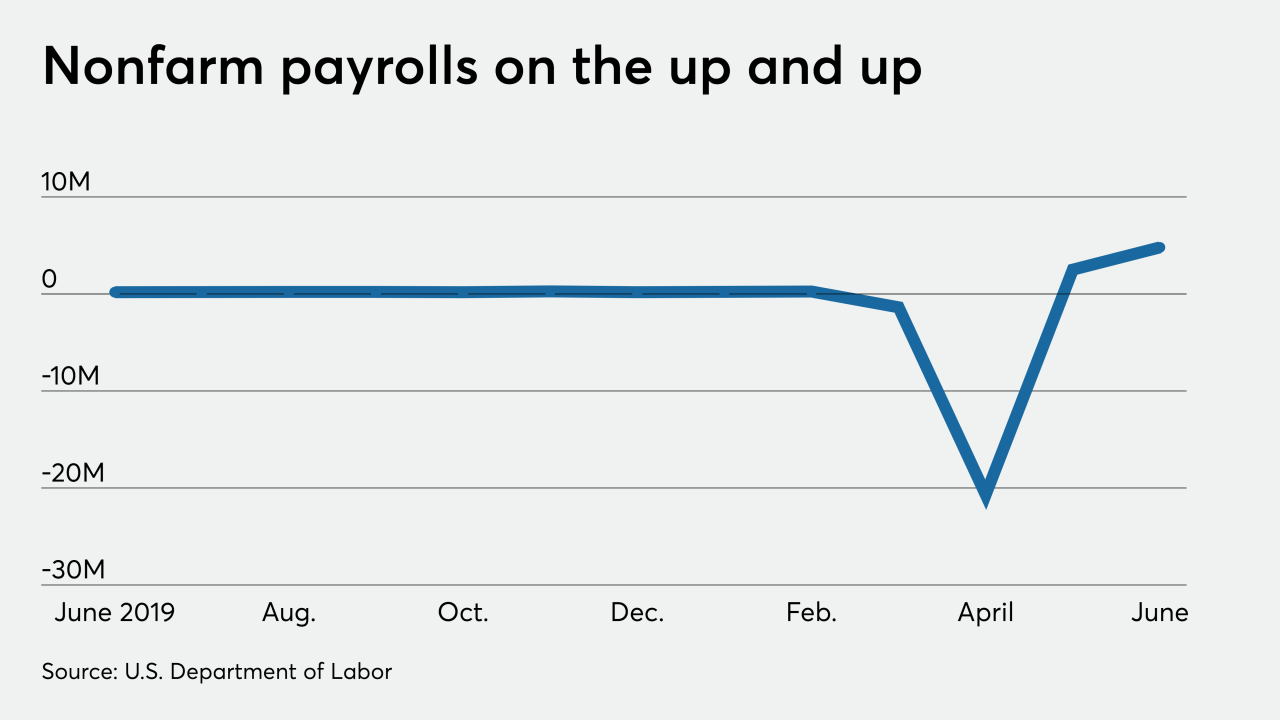
-
Two Federal Reserve presidents say it's gotten harder to predict what will happen with the economy.
June 25
-
Mostly stronger-than-expected data suggests improvement, with a long way to go.
June 18
-
One day after the FOMC said it would keep rates where they are, the short-end of the yield curve inverted.
June 11
-
Fear of a second wave of illnesses will keep economy muted.
June 4
-
Economy still hurting as reopening in early stages.
May 28
-
Jobless claims went down for the sixth week in a row and the figure is now below 3 million for the first time since the week of March 14.
May 14
-
Initial jobless claims continued to slide, but remain above the 3 million mark, as an expected ugly unemployment report is on deck.
May 7
-
Thursday’s jobless claims at 3.839 million, weaker income and spending data show COVID-19 continues to dampen economic activity.
 April 30
-
While the number of people filing for unemployment dropped to 4.4 million, there are now 26 million Americans without work and economists expect the unemployment rate to hit 20%.
April 23
-
Jobless claims fell in the latest week though now 22 million Americans filed for unemployment since late March.
April 16
-
Incoming data continued to show massive hits from the efforts to stem the spread of COVID-19, with jobless claims doubling and the New York manufacturing sector hitting all-time lows in activity.
 April 2
-
Initial jobless claims surged, as expected, hitting an all-time high of a seasonally adjusted 3.283 million in the week ended March 21, as the impacts of the coronavirus-driven closures showed in the numbers, the Labor Department said. The previous high for claims was 695,000 in October 1982.
March 26
-
As the Federal Reserve continues trying to keep markets liquid as the stock market sinks, economic data are showing the effects of COVID-19.
March 19
-
The PPI fell 0.6% in February, the biggest decline in over five years. The core rate fell 0.3%
March 12
-
Economists surveyed by IFR Markets expect Friday’s employment report to show a gain of 175,000 jobs in February.
March 5
-
GDP, jobless claims, pending homes sales rise while durable goods orders decline.
February 27
-
Economists say regional surveys show rebound for now, but forecast remains mixed.
February 20
-
Nonfarm productivity grew at a 1.4% pace in the fourth quarter after slipping 0.2% a quarter earlier, the Labor Department reported Thursday.
February 6


