-
The revenue shortfall has the attention of some rating agencies.
 July 7
-
The nation's two largest crude oil producing states are reporting revenue increases in the wake of the Iran conflict, which began Feb. 28.
 July 2
-
The budget includes plans for transportation bonds to be sold over the next few years.
June 30
-
The state took nearly two years to publish its fiscal 2024 annual comprehensive financial report — and that was an improvement.
 June 30
-
While California has improved the timeliness of its audited comprehensive financial reports, Nevada continues to struggle.
June 26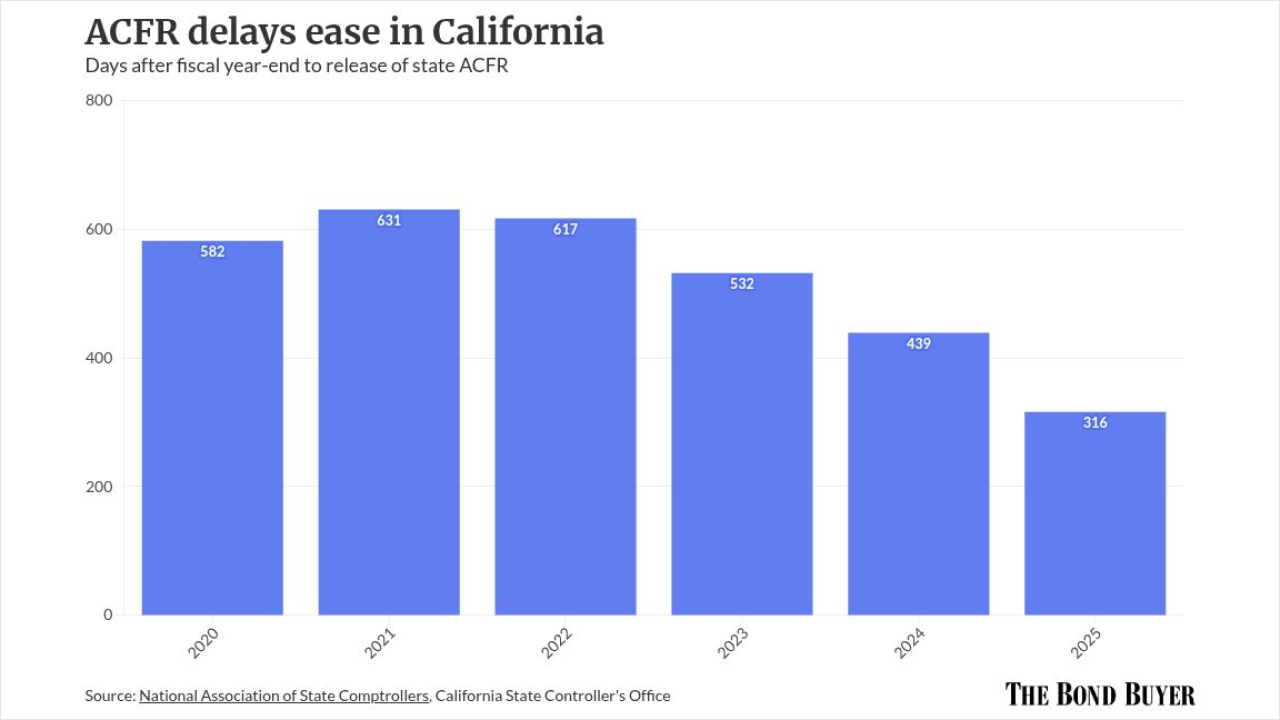
-
The governors of two top Midwest destinations for data centers froze tax breaks for the projects as grassroots opposition groups begin building coalitions.
 June 24
-
Illinois released its 2025 Annual Comprehensive Financial Report last week, completing the report nearly eight months earlier than its 2024 ACFR.
June 23
-
Market Intelligence analyst Jeff Lipton explains why constrained state budgets should not be mistaken for broad credit deterioration, pointing to rainy-day funds, revenue diversity, low debt burdens and strong debt-service protections as key stabilizers.
June 22 The Bond Buyer
 -
Cameron Hamilton, the current nominee to head up the Federal Emergency Management Agency, responded to accusations of political bias during a Senate hearing on Wednesday.
 June 18
-
For the first time since 2023, Georgia will bring its general obligation bonds to the municipal bond market, with a $1.57 billion competitive deal.
 June 18
-
Ohio Gov. Mike DeWine on Monday signed the state's $3.7 billion FY2027-28 capital budget, lauding the budget's breadth and impact on ordinary Ohioans.
June 17
-
Budget legislation was introduced in both houses of the California legislature last week, setting up negotiations.
June 15
-
California State Controller Malia Cohen released her monthly cash report and announced formation of a new economic advisory council this week.
June 11
-
Illinois Gov. JB Pritzker proposed changes to address his state's underfunded pensions in his budget proposal. Two made it through the legislature.
June 10
-
In need of revenue, some state legislatures are turning to their wealthiest residents for additional monies.
 June 8
-
Gov. Abigail Spanberger received a dose of good news for a constrained budget as a new revenue forecast shows a boost in tax collections.
June 3
-
Illinois lawmakers passed a $56 billion fiscal year 2027 budget as the legislative session wrapped up in the early hours of Monday morning.
June 3
-
The long-discussed pieces of the budget — a "pied-à-terre" tax, climate law changes, and higher education spending — have finally come together.
June 1
-
A surge in tax revenue driven by AI-related companies masks a persistent structural budget deficit, the Legislative Analyst's Office warned.
May 29
-
The decade-long enrollment decline of the state's public schools should prompt policy adjustments, the Public Policy Institute of California argues.
May 18


