-
With the "fragile" ceasefire in the United States-Iran conflict underway, the risk of higher rates beyond those from March has largely been removed, said BofA strategists.
 April 10
-
During the two-week ceasefire anything could still happen and a "blow up" would create significant volatility, said Kevin McGuigan, director at Municipal Market Analytics.
April 10
-
"It seemed to be a relief rally [Wednesday], and that's what everyone's hoping for. But fundamentally, they're still major issues that need to be addressed, but people seem to be giving that a pass," on Wednesday, said a source.
April 9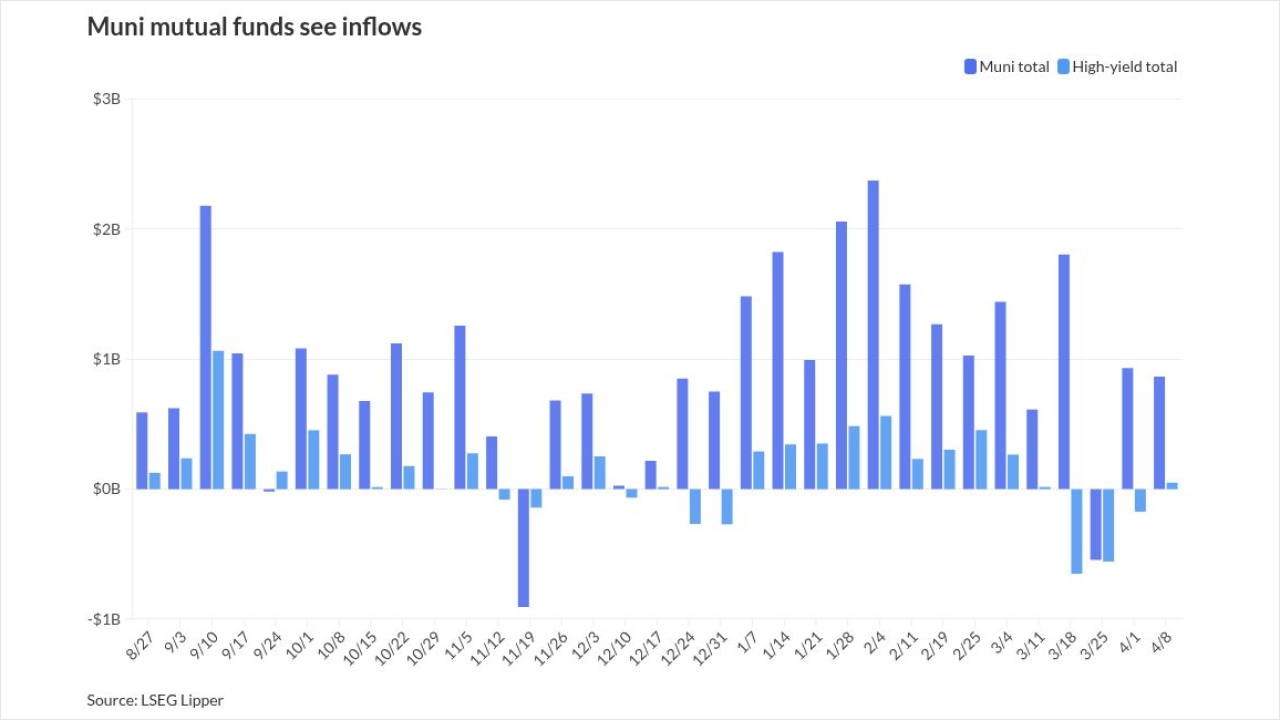
-
Financial markets, including the muni market, priced in too much of a "sure thing, done deal" Wednesday morning, said Kyle Gerberding, director of trading, a portfolio manager and partner at Asset Preservation Advisors.
April 8
-
Wednesday's market rally is tied to President Donald Trump's announcement of the temporary ceasefire, which came about Tuesday night, an hour and a half before the president's 8 p.m. deadline, market participants said.
April 8
-
"The steady tone talks to the underlying demand" for munis, NewSquare Capital's Kim Olsan said. "For the moment, munis are holding steady with a watchful approach.
 April 7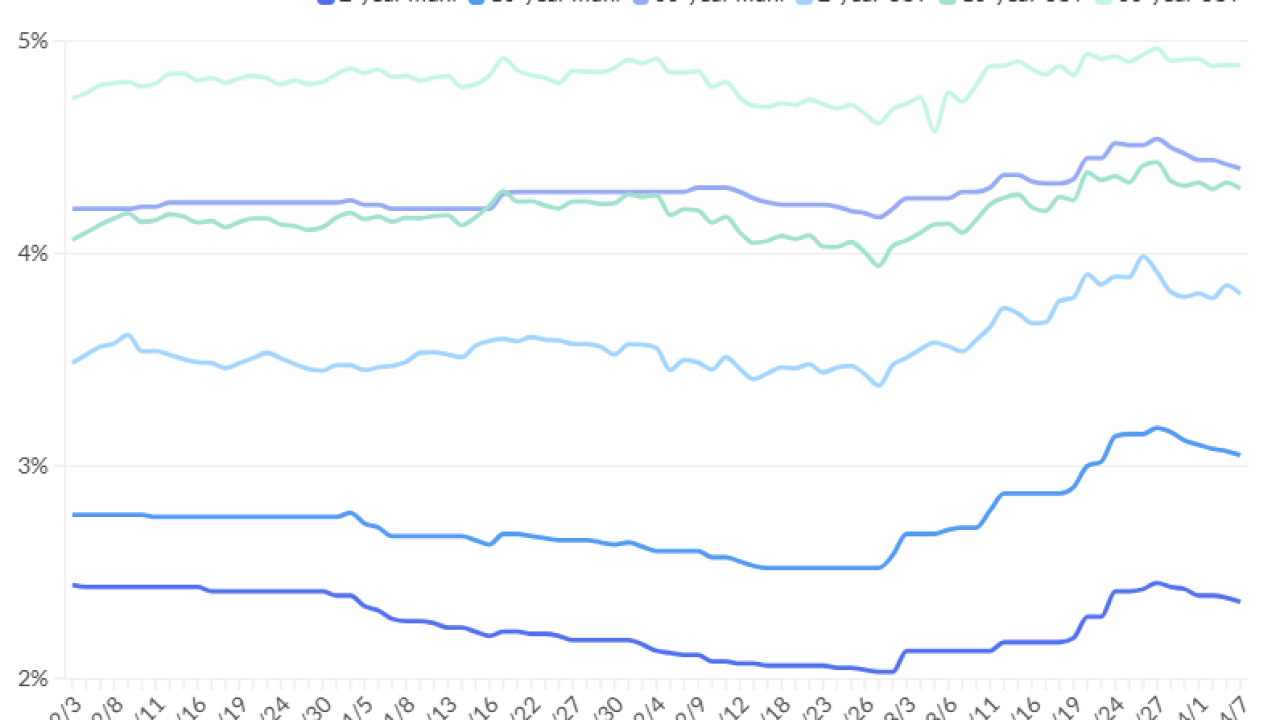
-
The yield curve adjusted lower every day last week, drawing strong inquiries to dealers, "especially in the 10-to-15-year space that had been hit hardest in March," Birch Creek Capital analysts noted in their weekly market commentary.
April 6
-
"Historically, the weeks leading up to the April 15 tax day have been challenging for the municipal market, often due to weaker supply and demand dynamics," said Sam Weitzman, a product manager at Western Asset.
April 6
-
Munis saw small gains Thursday, continuing the slight turnaround in sentiment the market has seen this week, with muni yields seeing modest bumps each day, said Jeremy Holtz, a portfolio manager at Income Research + Management.
April 2
-
Wednesday saw the third consecutive day of falling muni yields, suggesting the market is recovering from last week's selloff. The market is well-positioned for "a strong snapback," according to James Pruskowski, managing director at Hennion & Walsh Asset Management.
April 1
-
Many investors are waiting to see if the pattern of falling yields continues, according to Chris Brigati, managing director and CIO at SWBC.
March 31
-
This strength comes after another "challenging week" for the muni market, which continued to deal with ongoing macroeconomic uncertainty and somewhat heavy supply, said Daryl Clements, a muni portfolio manager at AllianceBernstein.
March 30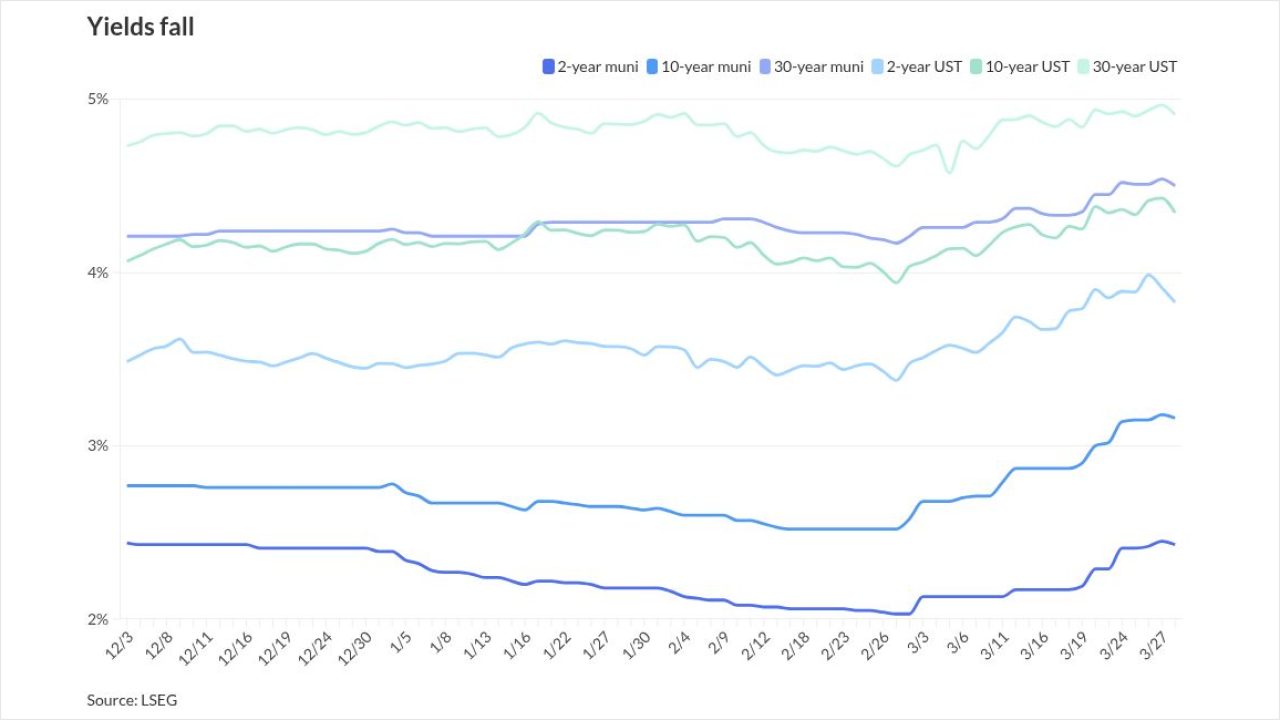
-
Ending a challenging week with ongoing geopolitical tensions and rising oil prices, muni yields were cut one to four basis points, depending on the scale.
March 27
-
Investors pulled $600 million from municipal bond mutual funds in the week ended Wednesday, according to LSEG.
March 26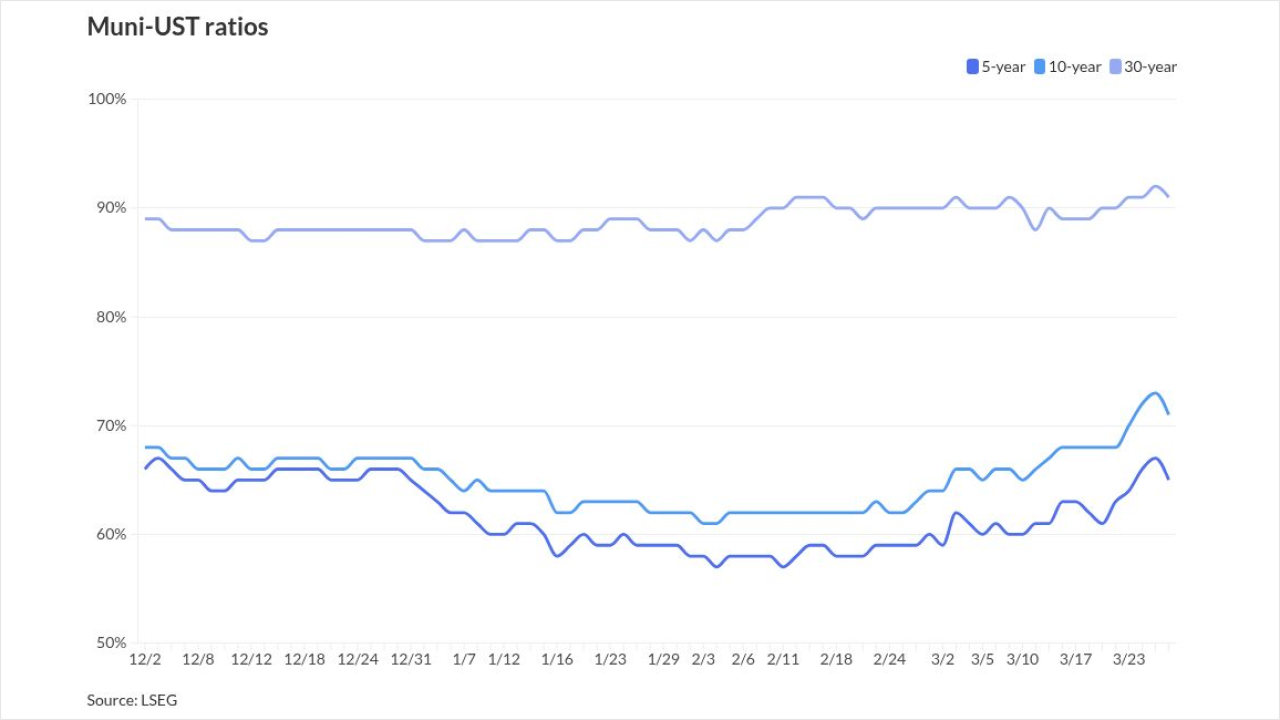
-
"Rates, not fundamentals, continue to drive benchmark yields higher, leaving munis on track for their fourth-worst monthly performance in 15 years," said James Pruskowski, managing director at Hennion & Walsh.
March 25
-
"You would think global instability leads to flight for quality, but you also have the inflationary pressures that come with higher oil prices. I would say the inflationary pressures have been winning, and that's why you're seeing Treasury and muni rates move higher," said Keith Richard, head of public finance at Siebert Williams Shank.
March 24
-
"We are in interesting times as the market must now balance these robust technicals against a backdrop of geopolitical tension in the Middle East and the nomination of Kevin Warsh, whose hawkish reputation is already being weighed by participants," said Jason Wong, vice president of municipals at AmeriVet Securities.
March 23
-
While it's unclear how long the war in the Middle East will drag on, once President Donald Trump announces an end to the war, things could change "on a dime," as happened with the tariff-induced volatility in April 2025, said Peter Block, managing director of credit strategy at Ramirez.
March 20
-
"Looking at where oil was and the potential for disruption, and this being tax season and issuers having to pull deals, there's no reason why yields wouldn't have been higher," said Matt Fabian, president of Municipal Market Analytics.
March 20
-
Some states and local governments "went on spending sprees" with pandemic funds and "got ratings upgrades that didn't have a lot to do with fiscal management," said an investor.
 March 20


