-
"A soft landing is increasingly conceivable but in no way inevitable," Barkin, who will vote on policy decisions this year, said in the text of a speech Wednesday.
January 3
-
COVID made predicting the economic future even more difficult. While calls for a recession and rate cuts for this year didn't pan out, here's what experts see for 2024.
 December 22
-
"It's important that we start to move rates down," Harker said Wednesday in a local radio interview. "We don't have to do it too fast, and we're not going to do it right away."
December 20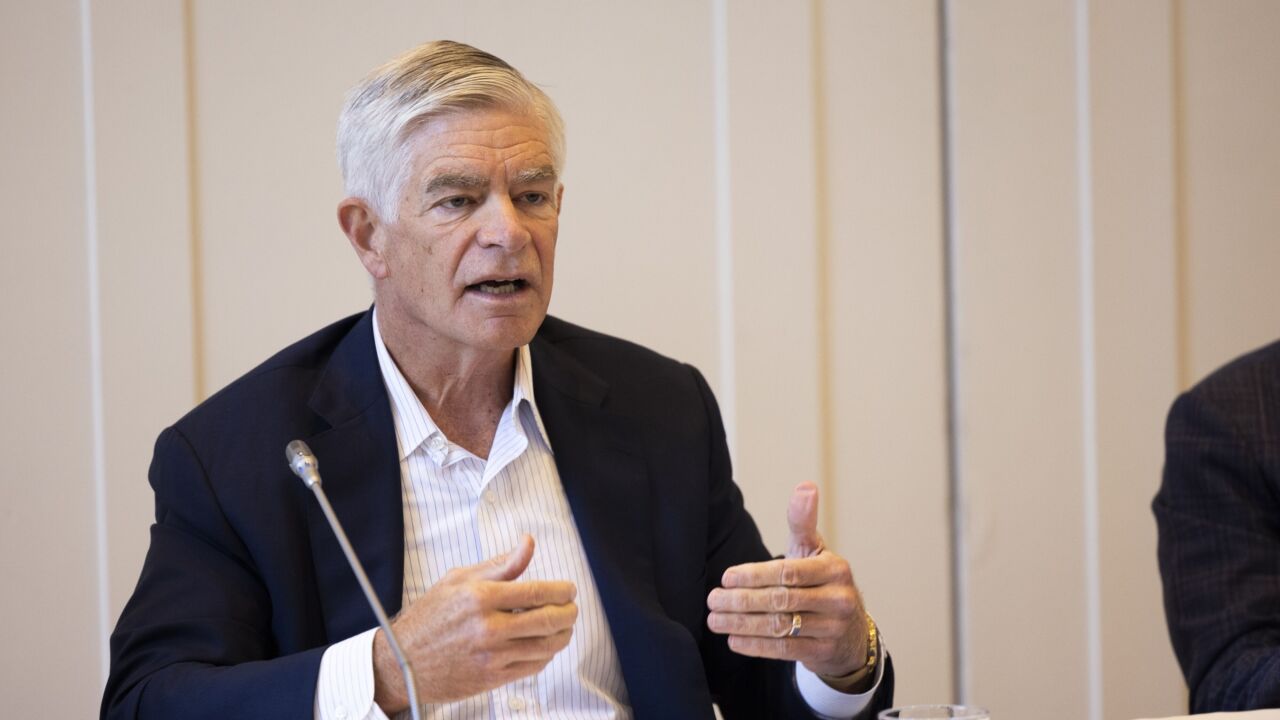
-
The Federal Open Market Committee meets Dec. 12 and 13 and in addition to their statement, they will issue a Summary of Economic Projections.

-
Federal Reserve Bank of New York President John Williams said it's too early for officials to begin thinking about cutting rates as soon as March as they consider whether policy is restrictive enough to get inflation back to 2%.
December 15
-
Secondary trading showed clear strength across the yield curve Thursday with bellwether names trading up significantly from recent prints and original pricing levels. New-issues in the primary benefited with issuers repricing to lower yields and tight to triple-A curves.
 December 14
-
Muni yields fell up to five basis points and dramatically underperformed USTs, as they are wont to do on FOMC days. Treasury yields fell as much as 29 basis points on the two-year and sent the 10-year down closer to the 4% threshold.
December 13
-
The Federal Open Market Committee's Summary of Economic Projections probably won't offer the 130 basis points of cuts next year that the market expects.
December 12
-
With a high of $450 billion and a low of $330 billion, no firms currently see issuance surpassing the records hit in 2020 and 2021.
December 5
-
All eyes are on the Federal Reserve and monetary policy. Join us as Scott Anderson, chief U.S. economist and managing director at BMO Economics, breaks down the latest FOMC meeting.

-
The large drop in yields since the end of October can be reflected in sentiment that investors expect a potentially dovish Fed next year, and that a soft landing narrative gives them "permission to finally purchase the bonds they've been admiring," said MMA's Matt Fabian.
November 21
-
Municipals closed out October in the red, the third consecutive month of losses for the asset class.
November 1
-
October's total volume rose 29.3% to $37.156 billion in 661 issues from $28.738 billion in 614 issues a year earlier. New-money grew more than 30% while refundings were up by nearly 75%.
October 31
-
This could be the first time the bond market has posted three consecutive negative total return years, according to John Hancock Investment Management Co-Chief Investment Strategist Matt Miskin.
October 30
-
If Treasury rates become "more stabilized," it provides "a good reason to be somewhat constructive on munis for a while," BofA Global Research said in a report.
October 27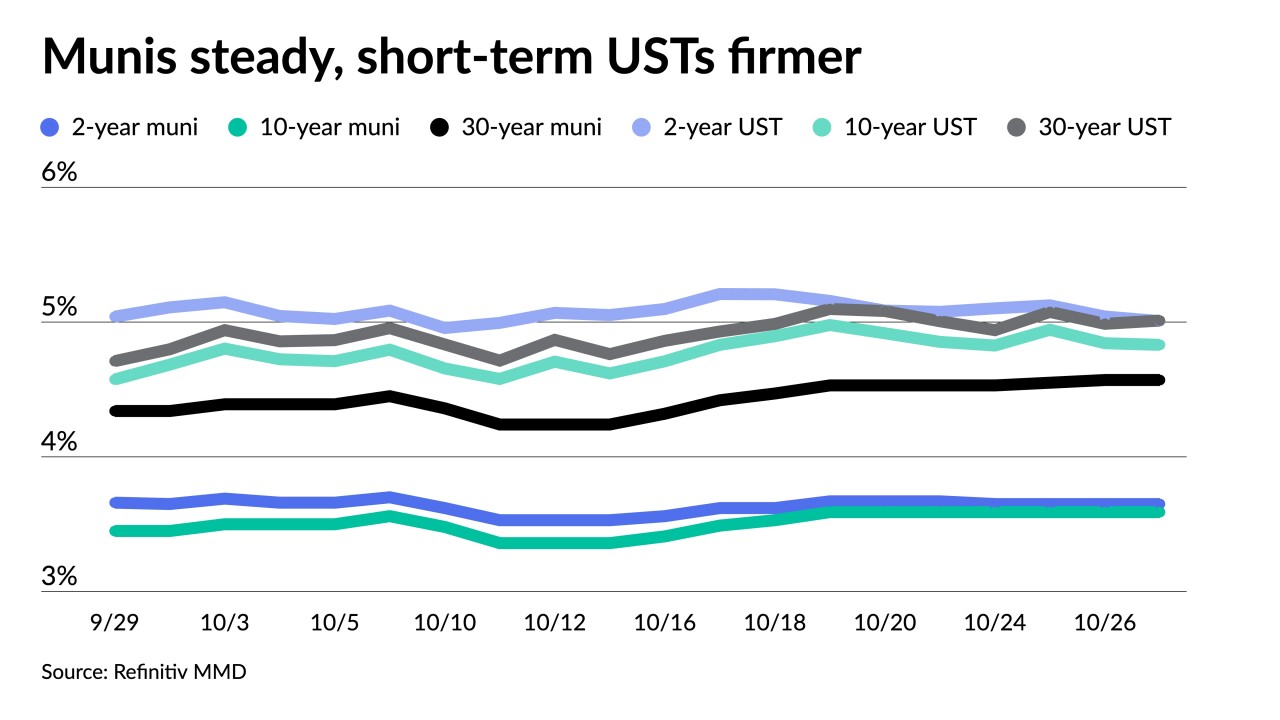
-
With nearly two years of volatility, The Bond Buyer wants to know your expectations for the year to come, from interest rates and bond volume to ESG and technology.
October 26 Arizent, The Bond Buyer
 -
"That is not how you drive policy and it's certainly not how you drive policy when the impact of policy happens with a lag," Mohamed El-Erian said. "This is the first Fed I know that has not gotten it."
October 20
-
"Regardless of the decision made at our next meeting, if the economy evolves as anticipated, in my view, we are likely near or at a holding point on the funds rate," Federal Reserve Bank of Cleveland President Loretta Mester said.
October 20
-
"I believe we can wait, watch and see how the economy evolves before making definitive moves on the path of the policy rate," Federal Reserve Governor Christopher Waller said.
October 18
-
"Financial markets are tightening up and they are going to do some of the work for us," Federal Reserve Gov. Christopher Waller said in a conversation moderated by Paul Ryan.
October 11


