-
It's difficult to tell whether the markets were more affected by spiking oil prices, eroding peace talks between the United States and Iran, or Kevin Warsh's hawkish comments during his confirmation hearing to chair the Federal Reserve, said James Pruskowski, managing director at Hennion & Walsh.
 April 21
-
Market support for taxables, particularly those from active issuers, remains firm. Taxables are seeing gains of 1.08% year-to-date, or 50 basis points above a UST index gain, said Kim Olsan, senior fixed income portfolio manager at NewSquare Capital.
 April 20
-
The market is experiencing a "calm before a potential storm," said Chris Brigati, managing director and CIO at SWBC.
April 20
-
"Ceasefire optimism augmented by a liquidity-driven risk-on macro market environment should be neutral for duration and positive for credit spreads," BofA analysts wrote.
April 17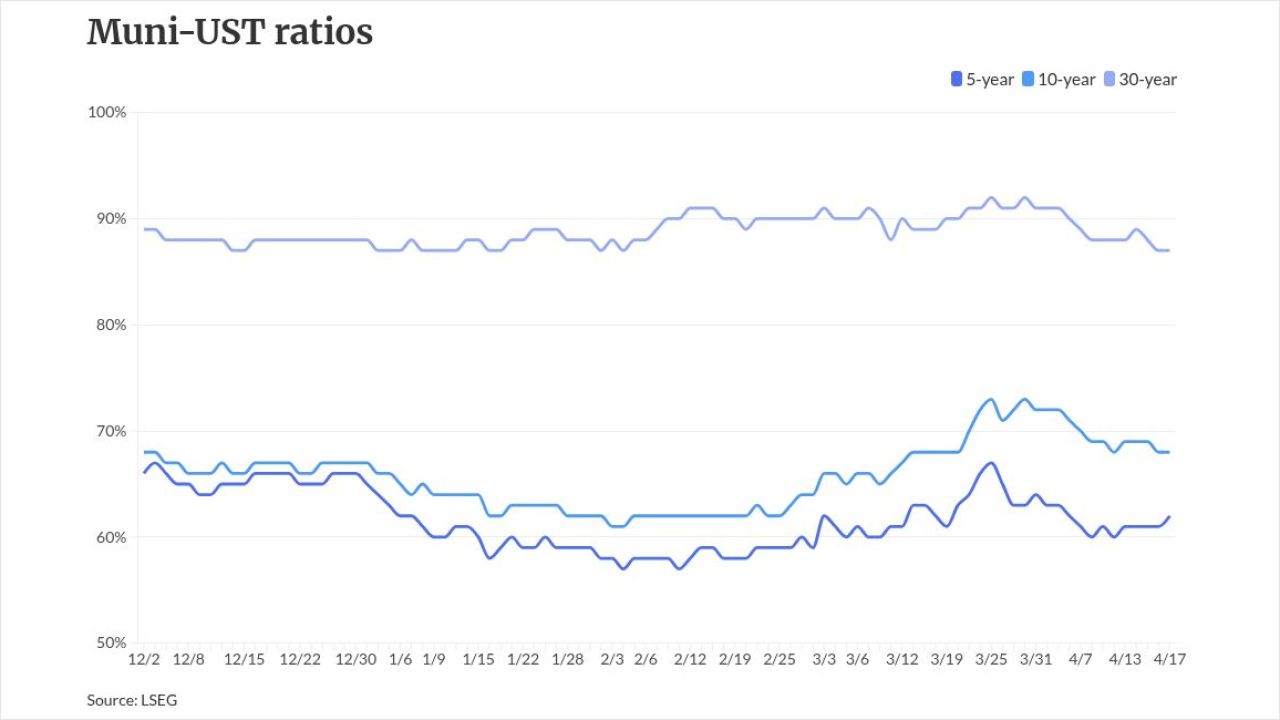
-
The two-week ceasefire with Iran comes to an end Wednesday, though President Donald Trump said Thursday at an event in Las Vegas the war should be ending soon.
April 17
-
News of a 10-day ceasefire between Israel and Lebanon may have reassured investors, said James Pruskowski, managing director at Hennion & Walsh, but it didn't cause munis to richen.
April 16
-
"Some of it is related to the headlines that we're seeing right now, particularly when we think about yields and what we've seen over the last couple of days," said Tim Iltz, fixed-income credit and market analyst at HJ Sims.
April 15
-
The college's closure is the "tip of the higher ed iceberg," said a bond buyer.
 April 15
-
The quiet in the muni market is likely due to geopolitical uncertainties, according to Cooper Howard, director of fixed income strategy at Charles Schwab.
April 14
-
Chris Brigati, managing director and CIO at SWBC, said he was "a little underwhelmed" with the market as volumes and flows were lighter than he expected.
April 13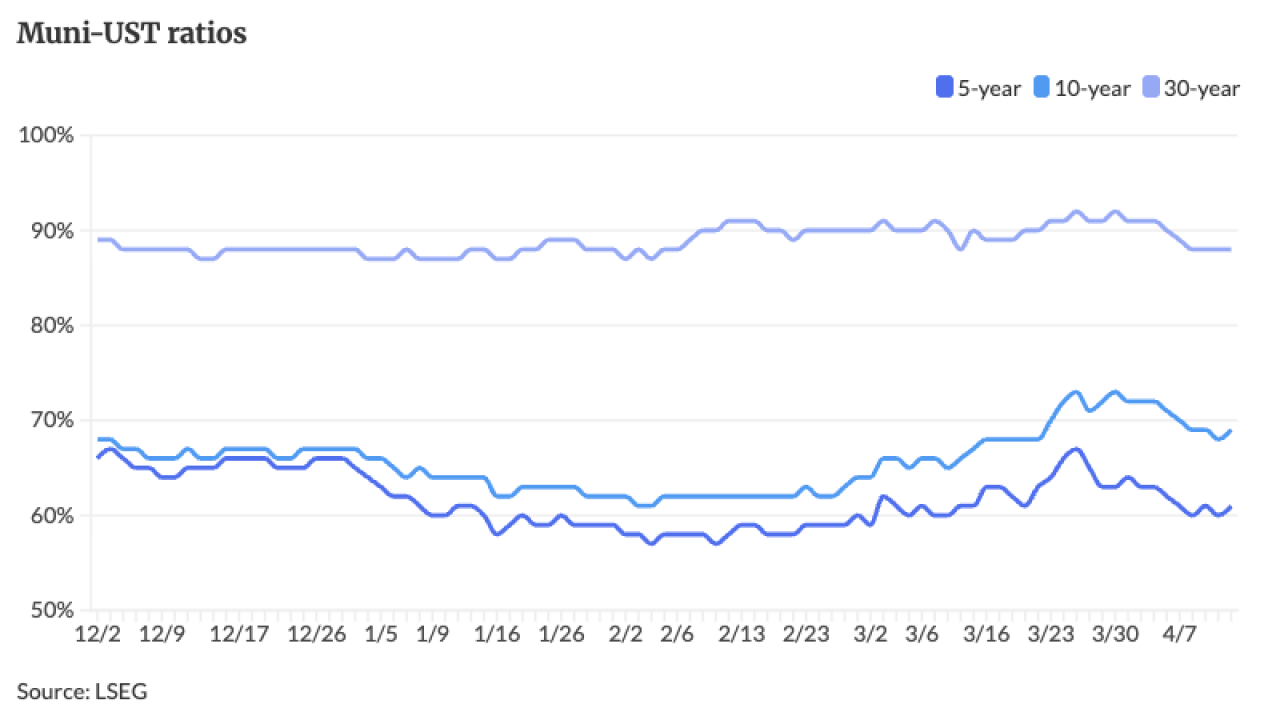
-
With the "fragile" ceasefire in the United States-Iran conflict underway, the risk of higher rates beyond those from March has largely been removed, said BofA strategists.
April 10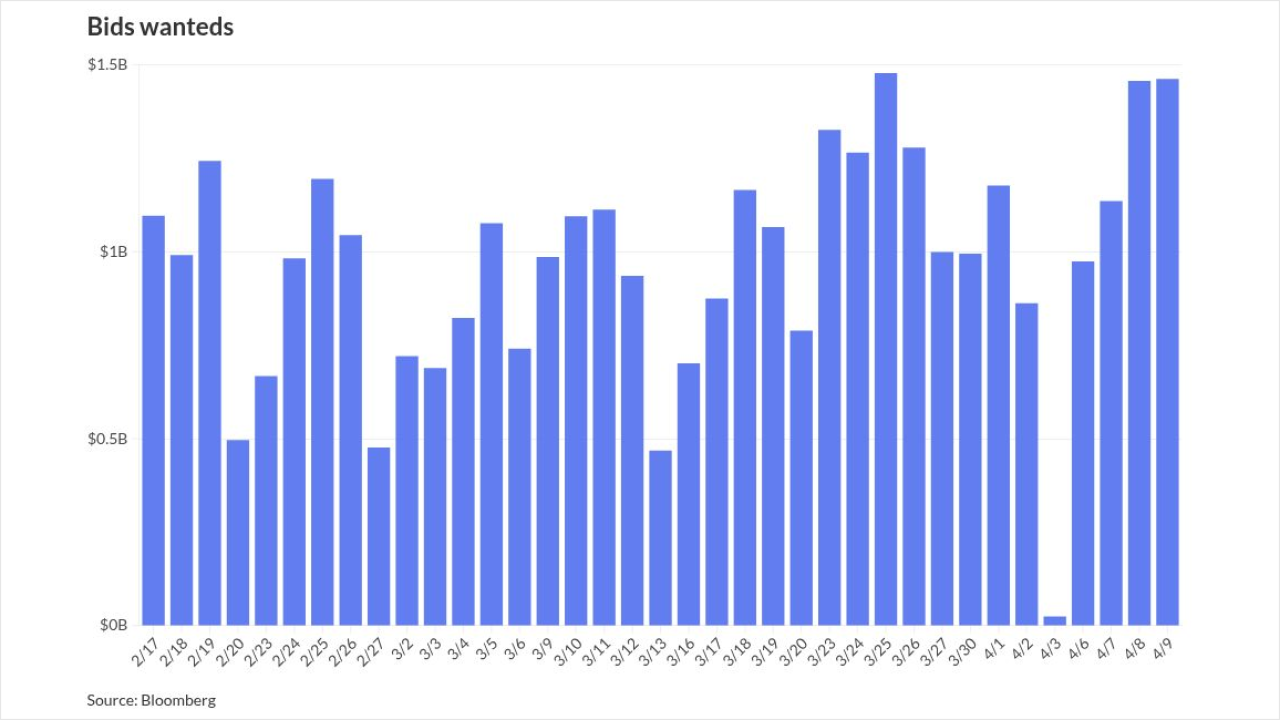
-
During the two-week ceasefire anything could still happen and a "blow up" would create significant volatility, said Kevin McGuigan, director at Municipal Market Analytics.
April 10
-
"It seemed to be a relief rally [Wednesday], and that's what everyone's hoping for. But fundamentally, they're still major issues that need to be addressed, but people seem to be giving that a pass," on Wednesday, said a source.
April 9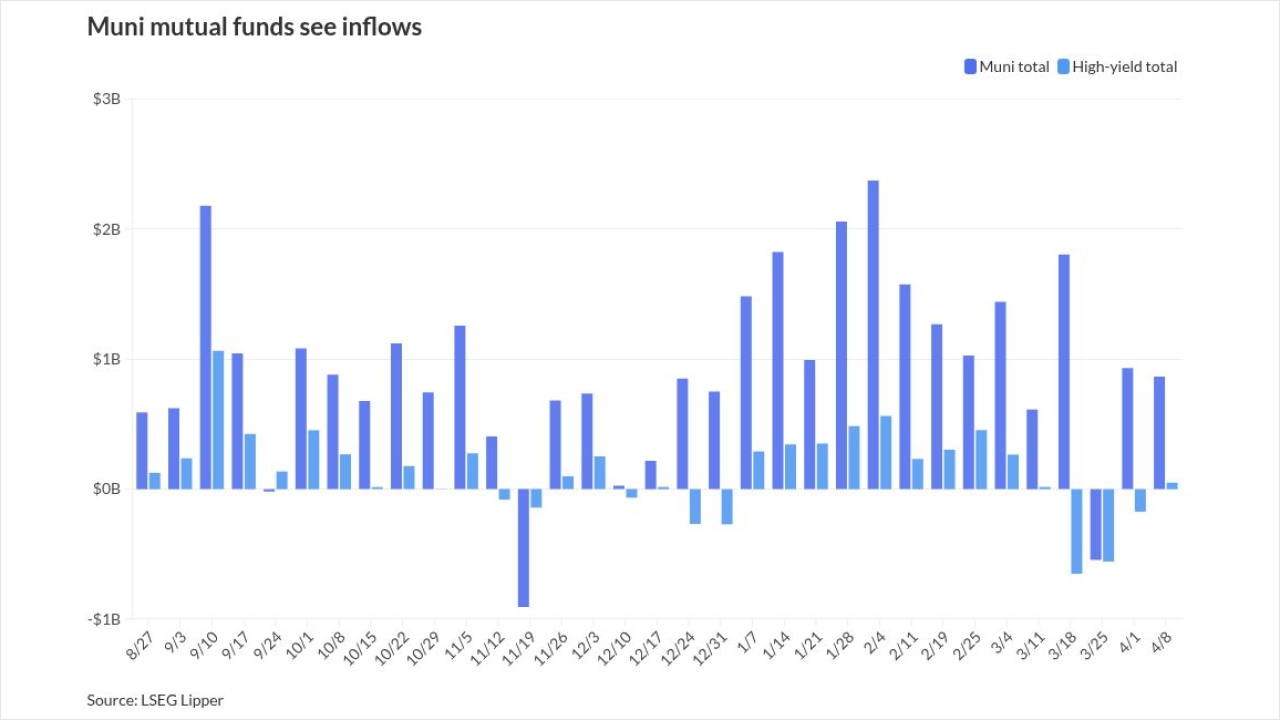
-
Financial markets, including the muni market, priced in too much of a "sure thing, done deal" Wednesday morning, said Kyle Gerberding, director of trading, a portfolio manager and partner at Asset Preservation Advisors.
April 8
-
Wednesday's market rally is tied to President Donald Trump's announcement of the temporary ceasefire, which came about Tuesday night, an hour and a half before the president's 8 p.m. deadline, market participants said.
April 8
-
"The steady tone talks to the underlying demand" for munis, NewSquare Capital's Kim Olsan said. "For the moment, munis are holding steady with a watchful approach.
April 7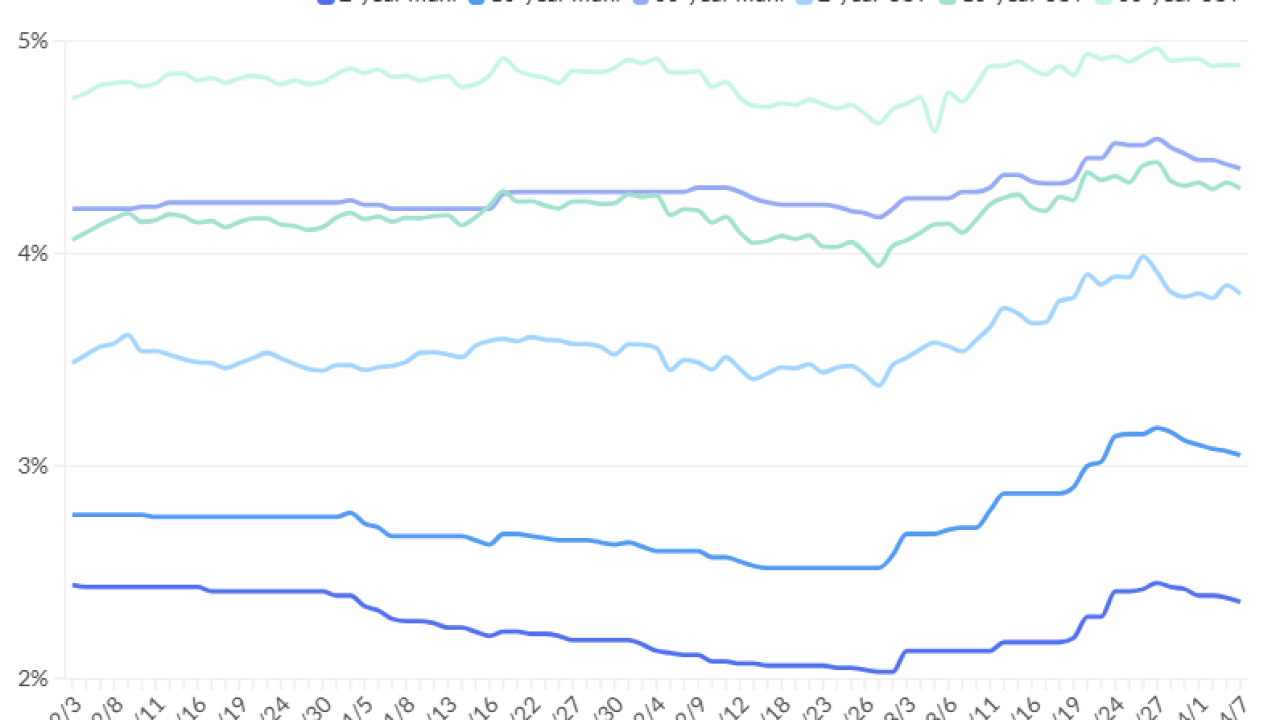
-
The yield curve adjusted lower every day last week, drawing strong inquiries to dealers, "especially in the 10-to-15-year space that had been hit hardest in March," Birch Creek Capital analysts noted in their weekly market commentary.
April 6
-
"Historically, the weeks leading up to the April 15 tax day have been challenging for the municipal market, often due to weaker supply and demand dynamics," said Sam Weitzman, a product manager at Western Asset.
April 6
-
Munis saw small gains Thursday, continuing the slight turnaround in sentiment the market has seen this week, with muni yields seeing modest bumps each day, said Jeremy Holtz, a portfolio manager at Income Research + Management.
April 2
-
Wednesday saw the third consecutive day of falling muni yields, suggesting the market is recovering from last week's selloff. The market is well-positioned for "a strong snapback," according to James Pruskowski, managing director at Hennion & Walsh Asset Management.
April 1


