-
Federal Reserve Bank of Chicago President Charles Evans said the central bank should increase interest rates to close to its “neutral” setting this year, implying as many as seven quarter-point hikes.
March 4
-
Federal Reserve Bank of Atlanta President Raphael Bostic said he favors raising interest rates by 25 basis points at the Federal Open Market Committee’s March meeting but would consider a larger half-point move if monthly inflation readings fail to decline from elevated levels.
February 28
-
Federal Reserve Bank of Cleveland President Loretta Mester said she supports raising interest rates next month and tightening policy at a faster pace if needed to curb inflation.
February 17
-
Federal Reserve Bank of St. Louis President James Bullard said bringing down inflation may require the central bank to overshoot a neutral target interest rate, which he sees as about 2%.
February 17
-
In an interview on Thursday, Federal Reserve Bank of St. Louis President James Bullard discussed his outlook for monetary policy following a report showing surging consumer prices.
February 11
-
Sarah Bloom Raskin tried again Wednesday to assuage Republicans’ concerns about her hawkish stances on mitigating climate risks ahead of a vote on her nomination to be Wall Street’s top bank regulator.
February 10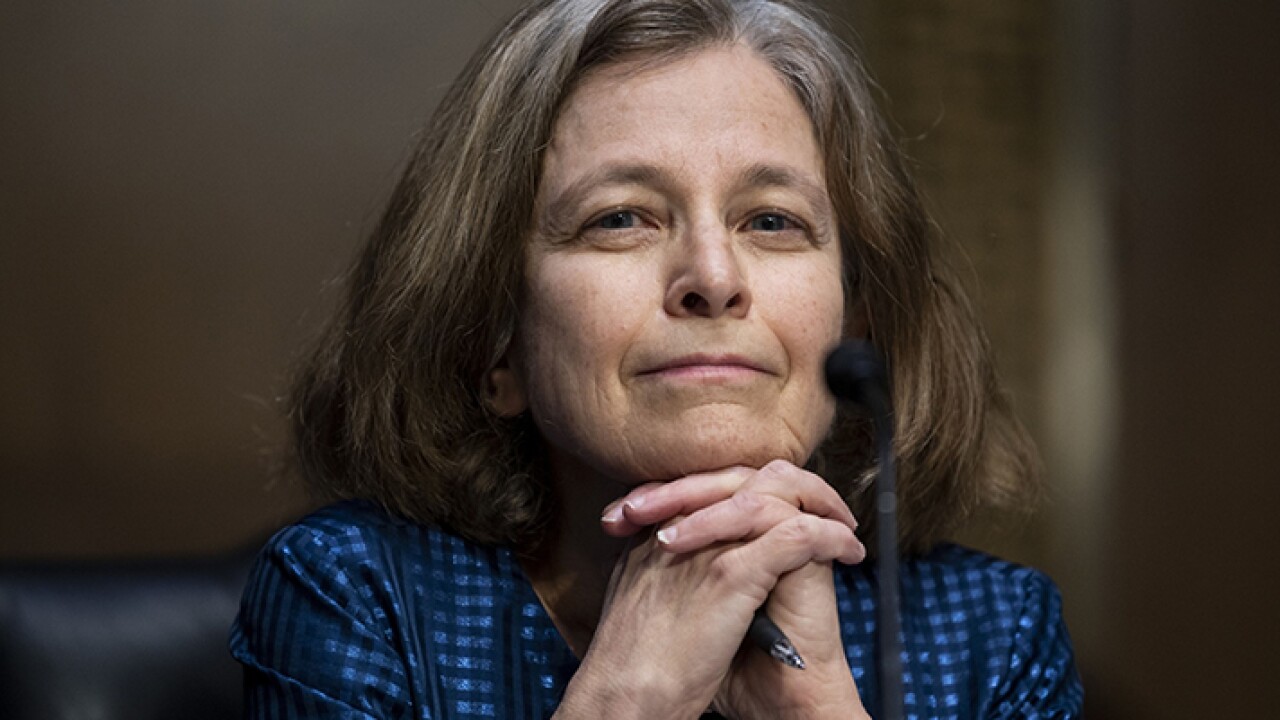
-
The Federal Reserve Bank of Boston announced Susan Collins, provost and executive vice president for academic affairs at the University of Michigan, will become its next president effective July 1.
 February 9
-
The market consensus is that interest rates will rise by two to three percentage points over the next three years. What will that mean?
February 7 MaxMyInterest
 -
Former U.S. Treasury Secretary Lawrence Summers said investors need to brace for the Federal Reserve to potentially raise interest rates at all seven remaining policy meetings this year and even for it to hike by more than a quarter point in one go.
February 4
-
Federal Reserve Bank of St. Louis President James Bullard said he would like to raise interest rates at the central bank’s meetings in March and May but played down the benefits of a larger-than-expected move.
February 1
-
Federal Reserve Bank of San Francisco President Mary Daly said the central bank could raise interest rates as early as March to fight high inflation, but she cautioned against overreacting and tightening policy too fast.
January 31
-
Bostic stuck to his prediction that three quarter-point increases starting in March is the most likely scenario, though stubbornly high consumer prices may justify a more robust rate rise.
January 31
-
The two biggest U.S. banks raised their forecasts of how quickly the Federal Reserve will raise interest rates this year, with Bank of America Corp. predicting a move at every meeting to tackle the highest inflation in four decades.
January 28
-
The statement offered no surprises, but Fed Chair jerome Powell's refusal to denounce more hawkish scenarios hurt market sentiment.
January 26
-
Why are markets so sanguine about the interest rate outlook? The answer lies in the Fed’s balance sheet, and in particular the level of excess reserves placed there by commercial banks.
January 24 Ninety One
 -
Newly released transcripts of Federal Reserve policy meetings in 2016 show then-Governors Jerome Powell and Lael Brainard were quick to pivot away from planned interest-rate hikes in the face of risks posed by a stumbling Chinese economy.
January 14
-
Federal Reserve Bank of Cleveland President Loretta Mester said the central bank should shrink its balance sheet as fast as it can without disrupting financial markets and repeated her backing to a March interest-rate increase.
January 12
-
Coming off last week's $19.5 million influx of weekly new issues, supply this week is lower as the market watches the Federal Open Market Committee meeting.
December 13
-
ICI reported $1.43 billion of inflows into municipal bond mutual funds in the week ending Nov. 17, down from $1.61 billion in the previous week.
November 24
-
Former U.S. Treasury Secretary Lawrence Summers said Federal Reserve policy makers are signaling a “new era” in which they recognize the U.S. economy is overheating as inflation runs at its fastest in three decades.
November 24


