-
Jobless claims decreased in the latest week, while new home sales fell 11%.
 December 23
-
The resurgence of the coronavirus led to a larger than expected drop in consumer confidence.
December 22
-
Lindsey Piegza says politics and consumer's continued fear may make the recovery more difficult.
December 21
-
The Federal Reserve's Summary of Economic Projections forecasts inflation won't hit its 2% target next year, and others agree.
 December 18
-
The Federal Reserve Bank of Philadelphia's manufacturing index fell to a seventh- month low, while jobless claims hit a three-month high.
December 17
-
The rising number of COVID-19 cases and the restrictions imposed to stop its spread, led to a pullback in consumer spending and has a regional service sector reeling.
December 16
-
While the latest read of manufacturing from the New York region suggests slowing, with COVID vaccines starting to be rolled out, the future index gained.
December 15
-
Increases in producer and consumer prices on an annual basis, with a 0.3-point gain compared to last year may be a signal inflation will emerge and might force the Federal Reserve to act, economists said.
December 11
-
With rising COVID-19 cases and increasing local restrictions, jobless claims can be expected to continue rising, economists said.
December 10
-
Many predicted double-digit unemployment at yearend, but that won't happen, but even after vaccines are introduced labor market questions will need to be addressed.
December 9
-
Strategists from both Wells Fargo Investment Institute and John Hancock have low expectations for inflation going forward.
December 8
-
'Exceptionally accommodative' monetary policy expected as inflation remains short of the Fed's 2% target, according to BNP economists.
December 7
-
The 245,000 increase in nonfarm payrolls indicated a slowing, and with lockdowns rising, December's numbers could fall again.
December 4
-
Christopher Waller was confirmed to a seat on the Federal Reserve Board on Thursday by a 48-47 vote along party lines.
December 3
-
The data continue to offer a mixed picture, with manufacturing expanding, services hurting, and while construction spending rose more than expected, it followed a downward revision to the previous month's number.
December 1
-
Pending home sales unexpectedly declined in October, the second consecutive month they dropped.
November 30
-
The flood of indicators released Wednesday were indicative of a slowing economy, analysts said.
November 25
-
The consumer confidence index suggested expectations have slipped, and the Richmond Fed's services survey also offered a dim view ahead.
November 24
-
Jobless claims rose and existing home sales surged, underscoring the uneven and sporadic nature of the COVID-19 pandemic recovery.
November 19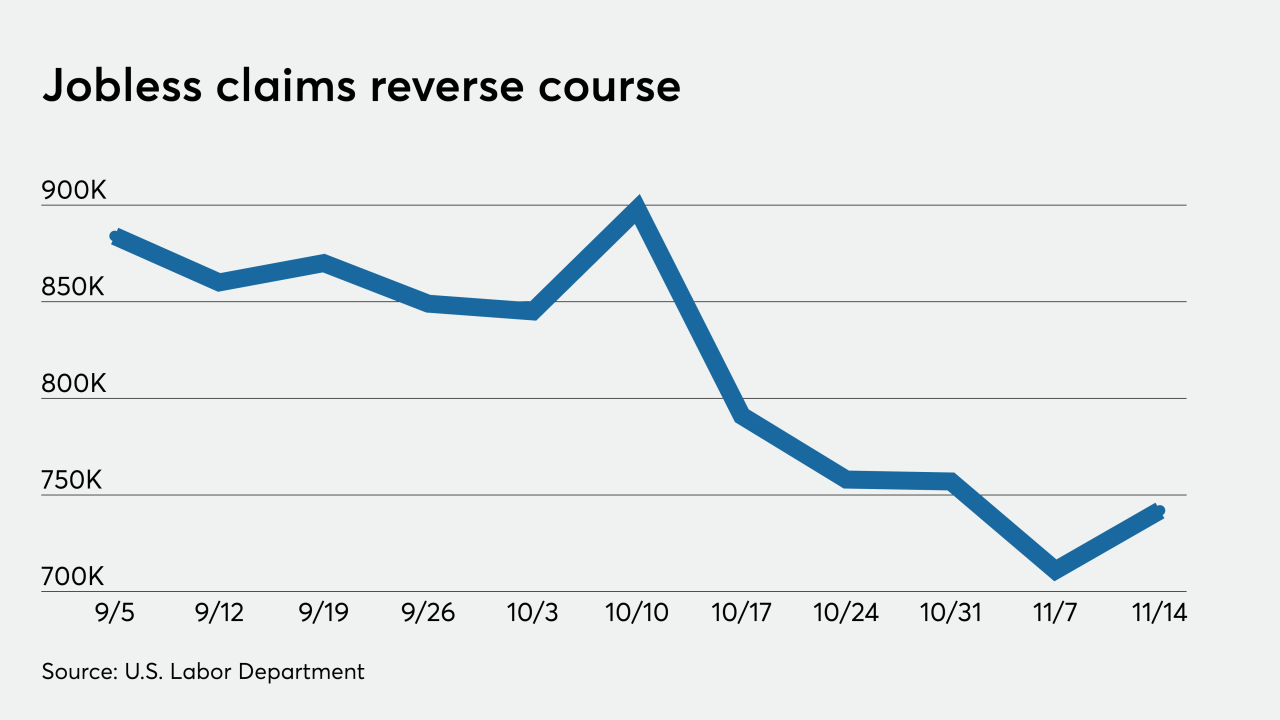
-
Two vaccines seem effective and nearly ready for use, spurring talk of a return to normal.
November 18


