-
The U.S. economy is growing slower than it has in the past couple of years, and conditions may get worse in the next few quarters, according to Federal Reserve Bank of St. Louis President James Bullard.
 September 23
-
Federal Reserve officials will probably seriously consider a new tool to contain short-term interest rates as they deliberate over when to start expanding the central bank’s balance sheet again, former New York Fed President William Dudley said.
September 23
-
A former top Federal Reserve official, who oversaw the U.S. central bank’s trading desk, has warned that the type of actions taken so far to quell this week’s turmoil in money markets may not be enough to keep conditions calm and fresh debt purchases may be needed.
September 23
-
The Federal Reserve announced a series of overnight and term operations for the next three weeks, signaling that it has control over this vital corner of the financial markets.
September 20
-
The Federal Reserve took center stage again Friday, with two presidents explaining why they dissented at the latest meeting and Vice Chair Richard Clarida terming it “healthy” debate.
September 20
-
Observers said the opponents of further rate cuts on the Fed tend to be the non-voters.
September 19
-
The market got what it expected and can now shift attention to the week's remaining deals after Fed policy makers cut interest rates by a quarter point.
September 18
-
The FOMC voted to cut the target range 25 basis points to 1.75% to 2% as “uncertainties” offset prospects for “sustained expansion of economic activity, strong labor market conditions, and inflation near the Committee's symmetric 2 percent objective.”
September 18
-
U.S. money markets showed some signs of calm as the Federal Reserve injected another $75 billion of liquidity and key rates pulled back from troubling levels.
September 18
-
Few deals priced, as trading was subdued before the Federal Open Market Committee’s interest rate decision.
 September 17
-
A rate cut alone probably won't avert a recession. A rate cut combined with a ceasefire in the trade war might, according to one market strategist.
September 17
-
The Federal Open Market Committee meeting featuring the release of a new Summary of Economic Projections should give the market a better clue as to whether the expected rate cut is part of a mid-cycle adjustment or the second step in an easing cycle.
September 16
-
The Federal Reserve is likely to cut interest rates this week as its takes out some insurance to keep the U.S. economic expansion continuing in the face of geo-political uncertainty and a global slowdown.
September 16
-
With a tweet, President Trump has reopened the debate about negative interest rates.
September 12
-
Thomas Garretson, fixed income portfolio strategist at RBC Wealth Management, and Craig Bishop, lead strategist, U.S. fixed income strategies at RBC Wealth Management, discuss the upcoming Fed meeting, rate cuts, the divide among participants, the inverted yield curve, Fed independence, and recession. Gary Siegel hosts.
September 12
-
President Donald Trump urged the Federal Reserve to lower interest rates to a level typically reserved for recessions or periods of persistently weak growth, suggesting that such a setting could allow the government to restructure Treasury debt at a lower cost.
September 11
-
Fed still divided, but 25 basis point cut is a good bet.
September 9
-
Federal Reserve Chairman Jerome Powell said the most likely outlook for the U.S. and world economy is continued moderate growth, but the central bank was monitoring “significant risks.”
September 6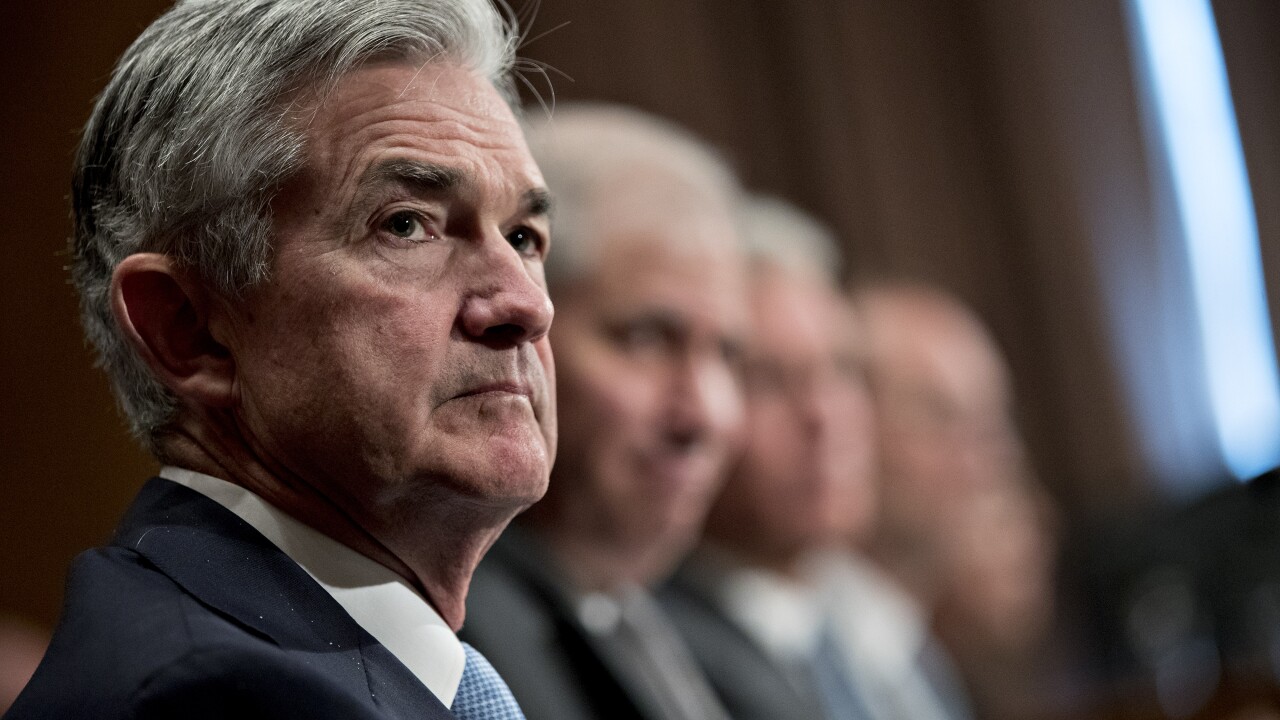
-
The Federal Reserve Bank of New York sees a nearly 38% chance of recession by August 2020, up from 31.5% in the July reading.
September 5
-
With the markets expecting rate cuts to continue, the Federal Reserve won't commit to further action before meeting later this month.
September 4


