-
The Federal Reserve’s bond-buying program is serving its purpose well at the moment, though the central bank could adjust the parameters if needed, New York Fed President John Williams said.
November 24
-
Financial markets should not fret if the Federal Reserve’s emergency lending facilities are not extended at the end of this year, when all but one are due to expire, Federal Reserve Bank of St. Louis Fed President James Bullard said.
November 13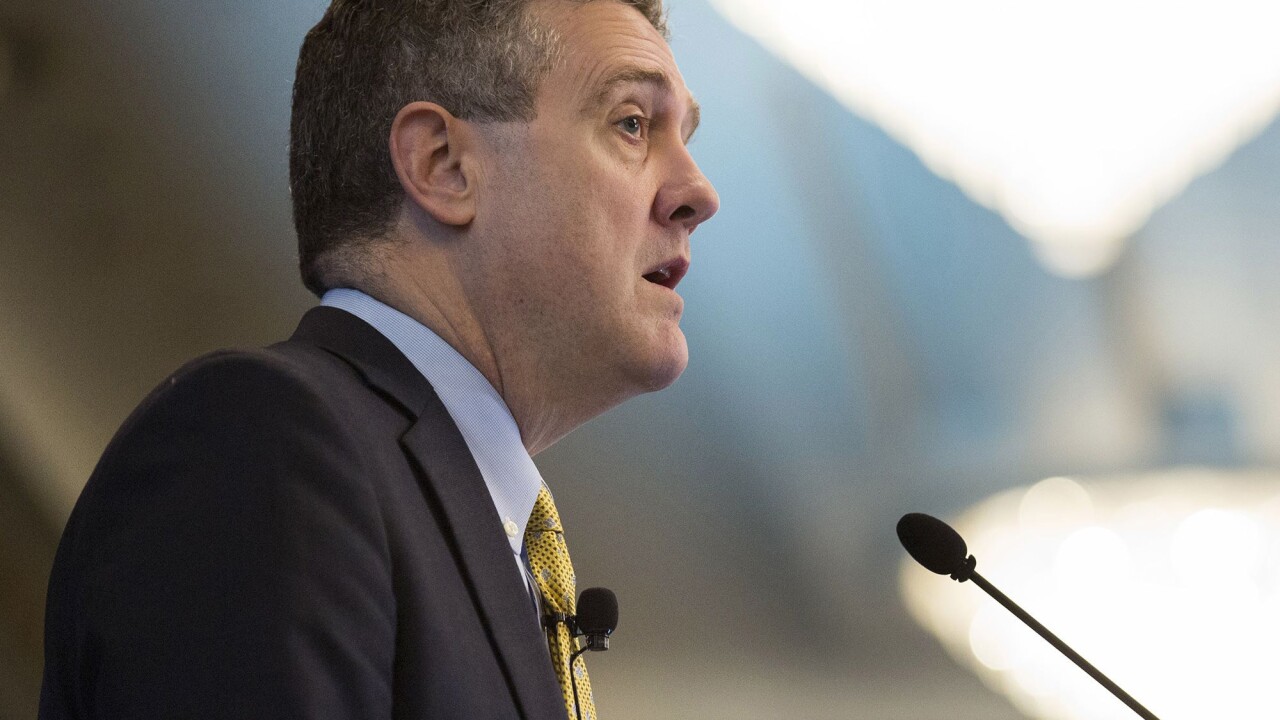
-
Bullard addresses coronavirus and the economy, University of Michigan consumer expectations drop.
 November 13
-
The U.S. economy should continue to recover from the coronavirus-induced recession even if Congress puts off consideration of additional fiscal stimulus to 2021, Federal Reserve Bank of St. Louis President James Bullard said.
September 30
-
Federal Reserve Bank of St. Louis President James Bullard, in the most upbeat comments by a central banker since the start of the COVID-19 outbreak, said the U.S. economy may surge at a 35% annualized rate in the third quarter and the nation may be close to a complete recovery by year-end.
September 24
-
Federal Reserve Bank of St. Louis President James Bullard said the U.S. economy has enough momentum to continue its recovery from the coronavirus slump even if Congress fails to pass additional taxpayer support.
September 22
-
The U.S. current account deficit widened to $170.5 billion in the second quarter from a revised $111.5 billion gap in the previous quarter, data released Friday by the Commerce Department showed.
 September 18
-
The nominations, essentially along party lines, move to the full Senate.
July 21
-
Federal Reserve Bank of St. Louis President James Bullard said a strategy of capping Treasury yields out to a certain maturity may not work and such yield curve control seems unnecessary with the market pricing in rates near zero out into the future.
June 23
-
The U.S. labor market has continued to heal at a relatively rapid rate through early June, St. Louis Federal Reserve researchers found, using real-time data that provides a more timely view than official government reports.
June 9
-
Federal Reserve Bank of St. Louis President James Bullard predicted the U.S. economy will recover from the highest unemployment since the 1930s with a rapid rebound that will push the jobless rate below 10% by December.
May 26
-
Federal Reserve officials warned the virus outbreak and a partial shutdown of the U.S. economy would result in a decline in the current quarter of historic proportions and risk the potential of massive bankruptcies that could create a lasting scar.
May 12
-
Federal Reserve Bank of St. Louis President James Bullard said policymakers need to mitigate the ongoing risks from the coronavirus in the second half of the year and gradually reopen the U.S. economy to avoid deeper harm.
May 6
-
Federal Reserve Vice Chairman Richard Clarida mixed a sobering acknowledgment of the damage inflicted on the U.S. economy by the coronavirus pandemic with an optimistic outlook for the second half of the year.
May 5
-
Uncertainty remains the only constant regarding the coronavirus pandemic, and two Federal Reserve Bank presidents offered positive thoughts, although no definitive answers.
April 14
-
President Donald Trump wants to re-open the U.S. economy by mid-April but Americans may take some persuading that it’s safe to emerge, said Federal Reserve Bank of St. Louis President James Bullard.
March 25
-
Federal Reserve Bank of St. Louis President James Bullard said the U.S. should declare the equivalent of a three-month break for nonessential businesses to fight the spread of the coronavirus.
March 23
-
Federal Reserve Bank of St. Louis President James Bullard said markets are wrong to assume that the central bank will cut rates again at the policy meeting in two weeks.
March 4
-
Federal Reserve Bank of St. Louis President James Bullard said the Fed is ready to act if the COVID-19 virus develops into a destabilizing force.
 February 28
-
Federal Reserve Board Chairman Jerome Powell stuck to his message in questioning before members of the House Financial Services Committee: the economy is doing well and the Fed will stay on the sidelines unless there is a “material change” to its forecast.
February 11


