-
Triple-A benchmarks have fallen double digits since Nov. 1, with the largest moves out long. California, the District of Columbia, Wisconsin and other issuers part of a $6 billion new-issue calendar priced.
November 9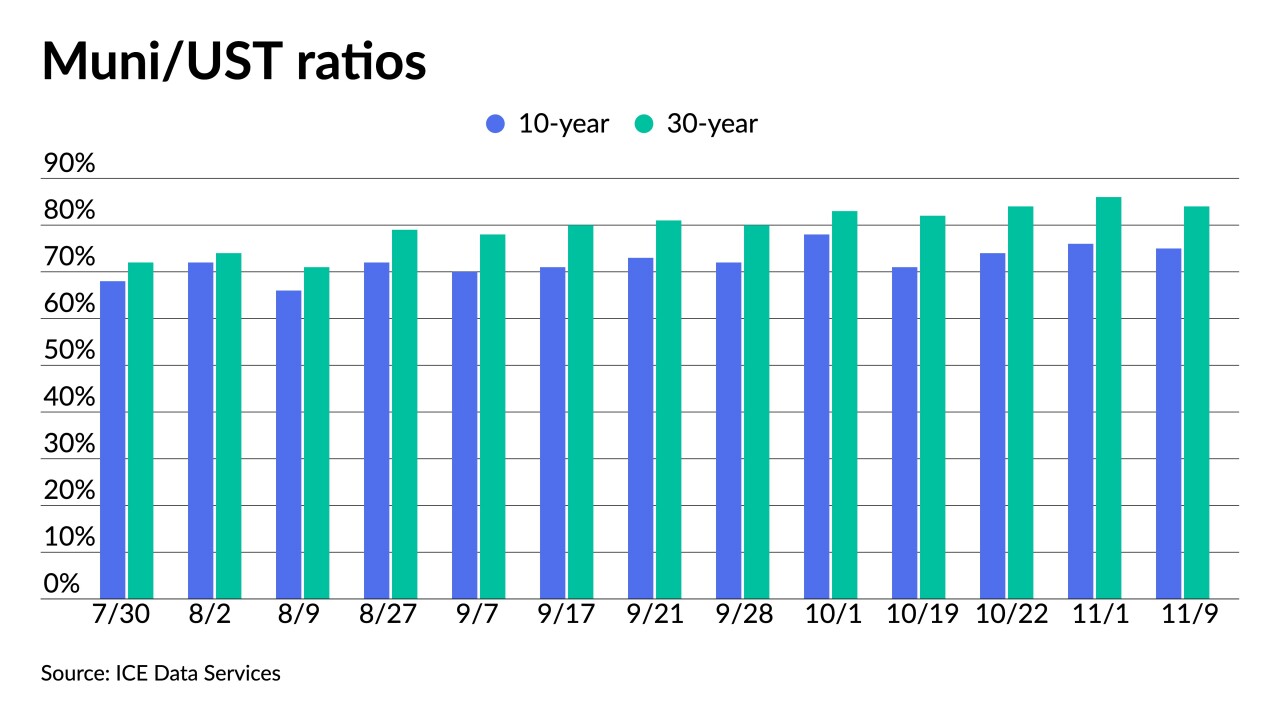
-
Municipals were quiet on Monday following Friday's rally and ahead of the $9.6 billion estimated to be priced early in the week before the Veterans Day holiday close Thursday. Connecticut priced for retail.
November 8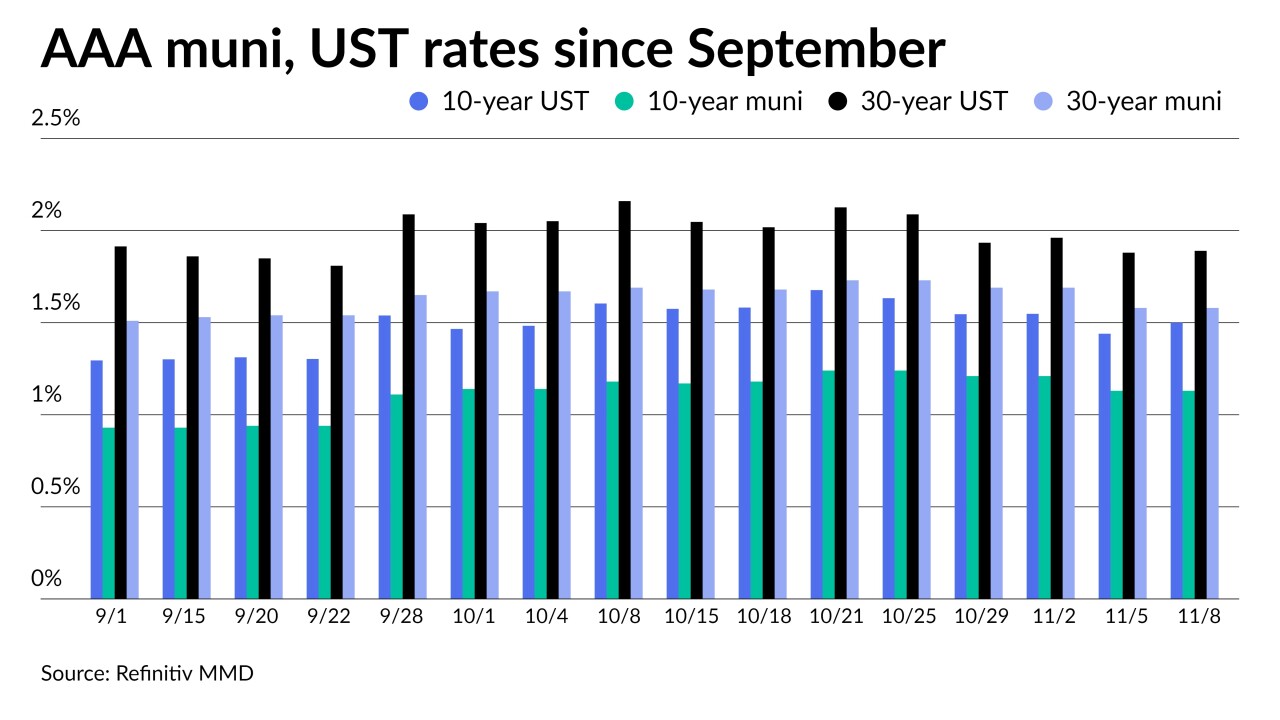
-
The long end of the municipal curve rallied under a backdrop of stronger-than-expected October jobs data and upward revesions to the prior two months ahead of the arrival of $9.6 billion next week.
November 5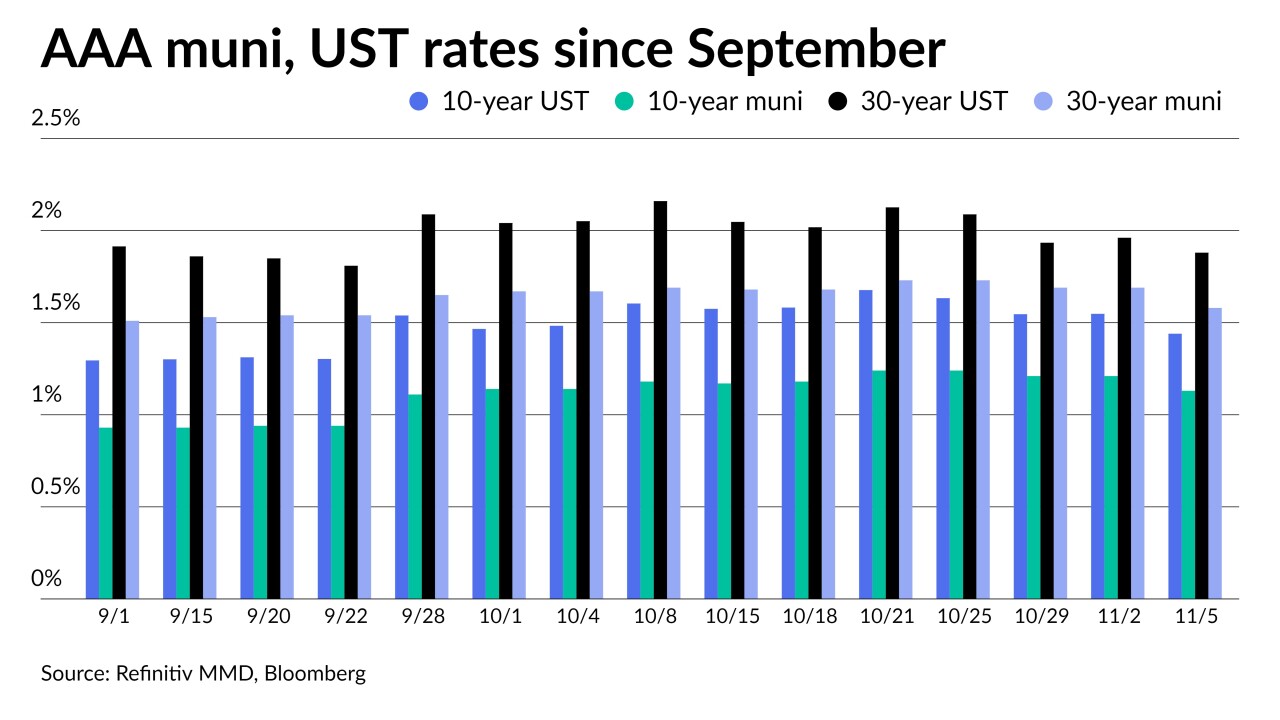
-
For 35 weeks in a row, investors have put cash into municipal bond funds as Refinitiv Lipper reported $603 million of inflows while high-yield funds eked out a gain of slightly more than $1 million.
November 4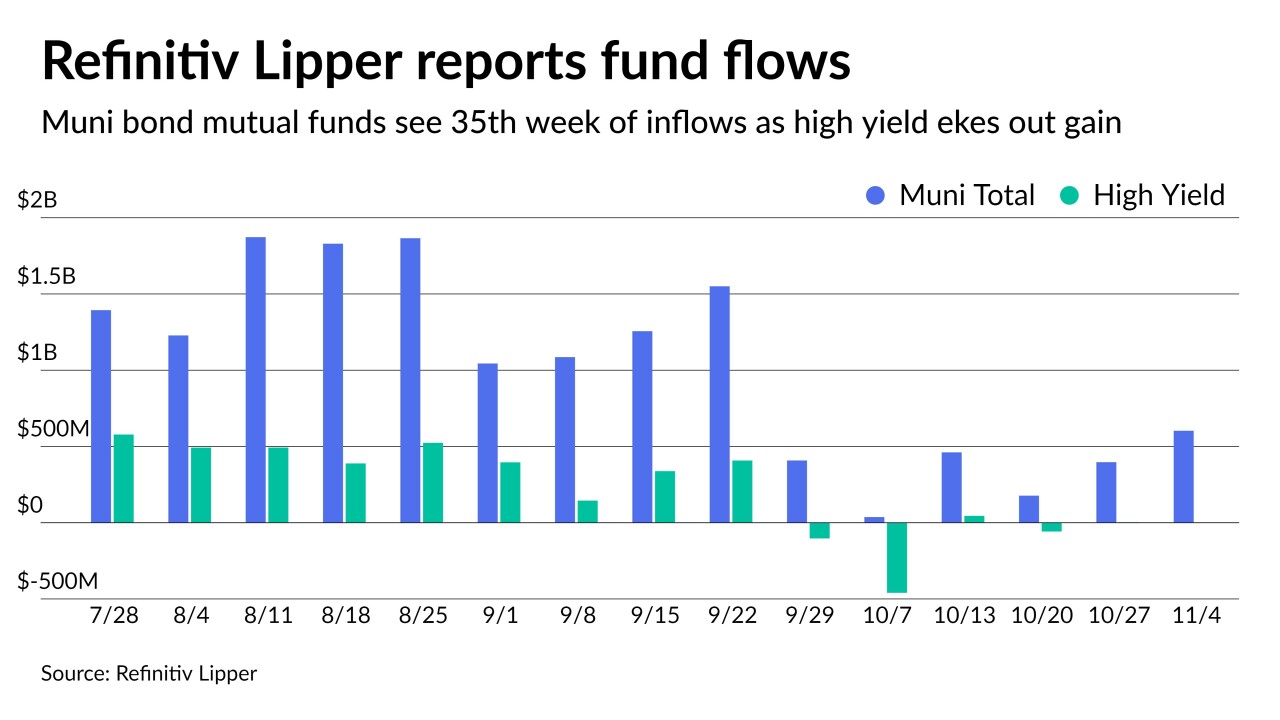
-
After the FOMC made taper official, high-grade benchmark yields ended the day one to three basis points better while USTs ended the day higher after an up-and-down trading session that moved the 30-year back above 2%.
November 3
-
The FOMC will likely take the opportunity to profess its reliance on data to decide liftoff and reiterate the threshold for a rate hike remains higher than for taper.
November 2
-
Chuck Stavitski and Elaine Brennan of Roosevelt & Cross and Ken Bieger of the Niagara Falls Bridge Commission talk about how the Canadian border closing due to COVID-19 affected upstate New York issuers. Chip Barnett hosts. (16 minutes)
 November 2
-
Though monetary policy has been in the forefront, at mid-month the tone changed with global inflation outlooks and federal infrastructure and social package in flux.
November 1
-
A lighter, $5 billion calendar, heavy on healthcare, kicks off November. Most participants agree volatility in U.S. Treasuries will be a leading factor for municipal market performance. Uncertainty in Washington also isn't helping the asset class.
October 29
-
Amid a flattening municipal yield curve and inversion of the Treasury market, new issues fared better than the secondary on Thursday as participants prepared for month end.
October 28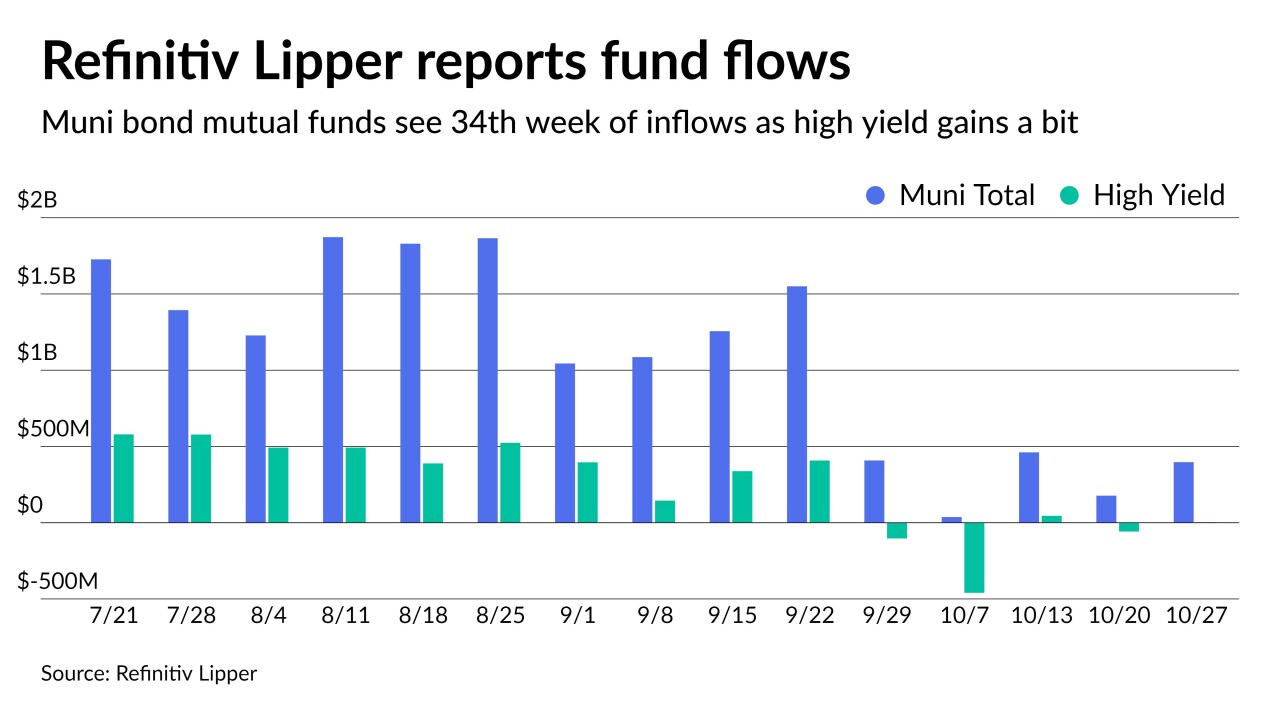
-
ICI reported the lowest inflows since outflows in March, while exchanged-traded funds saw an uptick.
October 27
-
As of now, returns for the month will very likely end in the red. The Bloomberg U.S. Municipal Index is at -0.40% for the month and +0.39% for the year.
October 26
-
Despite a short-end U.S. Treasury rally, municipals face pressure on the one- and two-year as participants look to month-end positioning.
October 25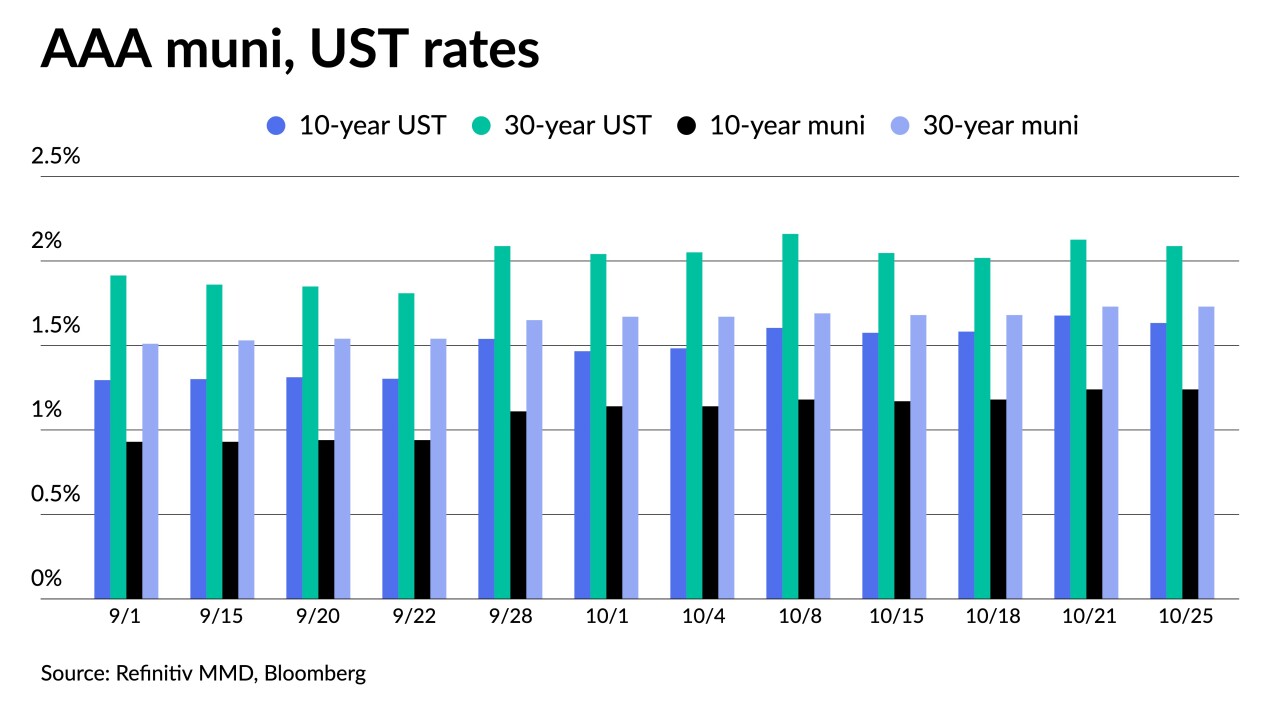
-
Volume falls slightly in the week of October 25 with total potential volume estimated at $7.408 billion: $6.036 billion of negotiated deals and $1.372 billion in the competitive market.
October 22
-
Municipal bond mutual fund inflows fell to $177 million while high-yield is back to outflows, both signaling selling may be moving the market toward another larger correction.
October 21
-
The Investment Company Institute reported $385 million of inflows while ETFs fell to $124 million.
October 20
-
Spreads have been widening, but secondary trading was on the light side and triple-A benchmarks were cut by only a basis point in spots even as U.S. Treasury yields once again rose on the 10- and 30-year.
October 19
-
Triple-A benchmarks saw one basis point cuts in spots inside 10 years while the five-year U.S. Treasury hit a high of 1.154%.
October 18
-
Friday’s data suggested inflation remains a problem, as the voices calling for Federal Reserve action increase.
October 15
-
Municipals have mostly held steady as bid-wanteds have risen, but so have yields and ratios, making for a more satisfactory range for investors getting into the market at these new higher levels.
October 14


