
-
While Jacques Jiha cited improved outlooks to stable from Moody's and S&P, skeptics warned of inadequate use of federal aid and lingering outyear budget gaps.
May 25
-
Federal aid and vaccine distribution boosted the city's finances and optimism for economic recovery, but uncertainty lurks at the national and state levels.
May 18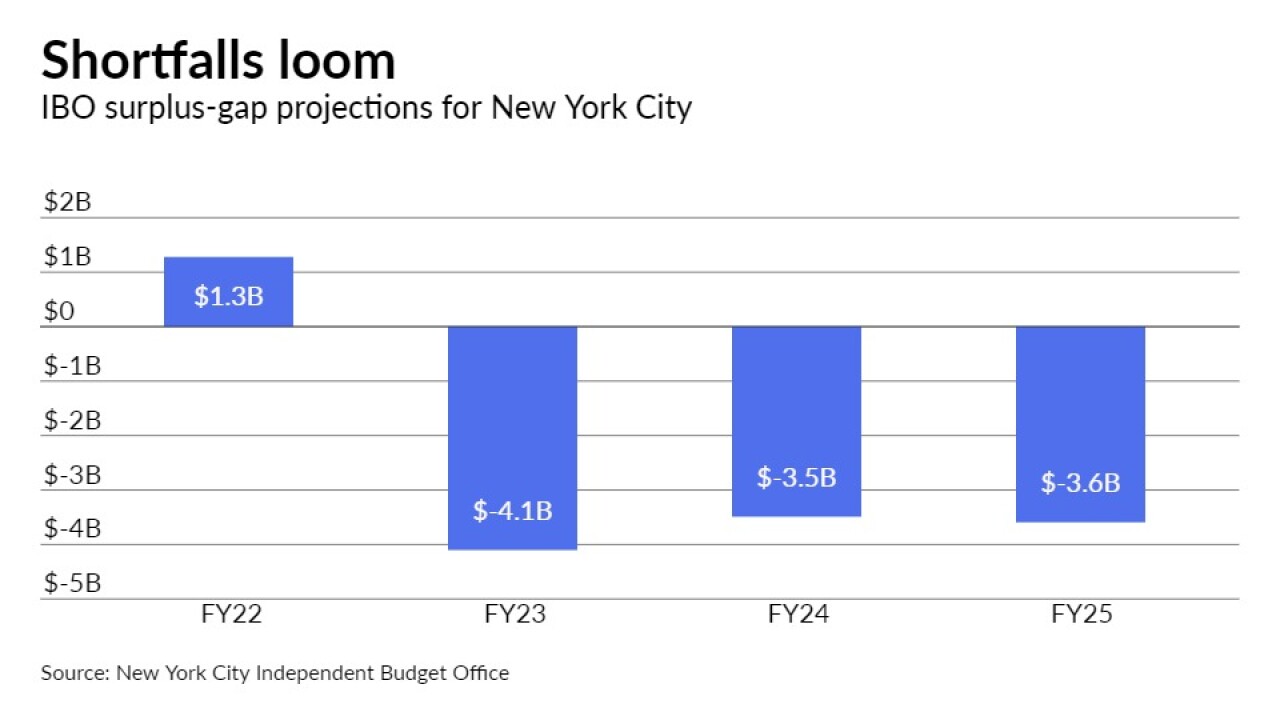
-
Congestion pricing, a Manhattan Greenway, open-streets programs and a plethora of other uses are all at play as city officials plan a recovery from COVID-19 and a full reopening of the city by July 1.
April 29
-
New York City's mayor cited roughly $15 billion in additional state and federal aid, improving COVID-19 statistics and the further lessening of restrictions in releasing his executive plan.
April 26
-
The change represents a doubling of related investments, Mayor Bill de Blasio and Comptroller Scott Stringer announced.
March 23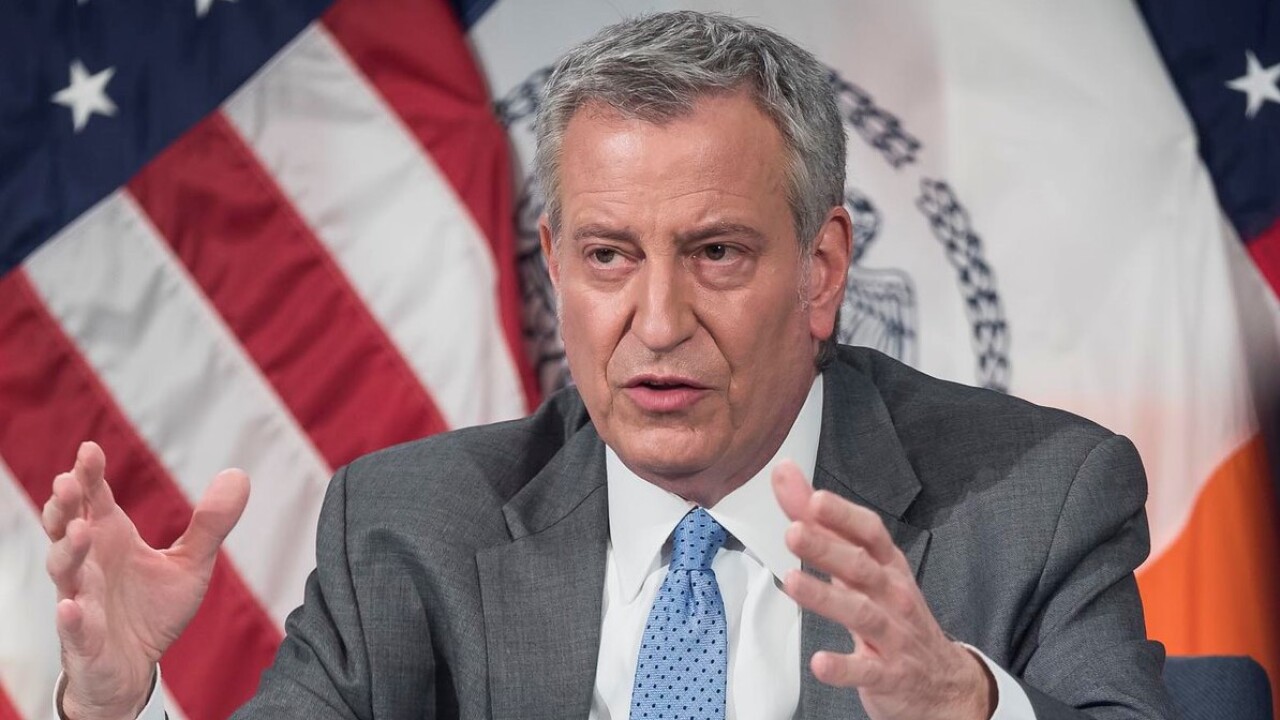
-
By the end of March, more than 1,700 projects will have the go-ahead to resume, according to the mayor.
March 2
-
Mainstreaming some emergency measures would provide the Department of Design and Construction more contracting flexibility, said first deputy commissioner Jamie Torres-Springer.
February 22
-
Howard Cure of Evercore and Maria Doulis, formerly of the Citizens Budget Commission, explore New York City's fiscal variables amid the pandemic. Paul Burton hosts. (30 minutes). Recorded Jan. 26.
February 16
-
Uncertainties include state and federal aid levels, the effects of vaccine distribution and the MTA's finances.
February 12
-
Dovetailing on President Biden's clean-energy initiatives, the Employees’ Retirement System and Teachers’ Retirement System voted for the divestments.
January 26
-
The New York mayor rolled out his $92.3 billion preliminary spending plan with warnings about federal and state variables, more pronounced amid the COVID-19 crisis.
January 15
-
The twice-impeached president built his civic reputation on projects such as Central Park's Wollman Rink.
January 14
-
Uncertainties loom as Mayor Bill de Blasio’s budget team scrambles to craft the balanced fiscal 2022 spending plan he must reveal by late January.
December 4
-
Comptroller Stringer said Mayor de Blasio can present his updated Financial Plan with a path to a balanced budget for fiscal 2022 without cuts to essential services, layoffs of city workers, or borrowing to support operating expenses.
November 18
-
The comptroller report said New York City's reserves mitigate the need for bond financing to fund operations as the city has more in reserve funds than pre-Great Recession and Sept. 11-related recession figures.
October 29
-
New York's mayor is shifting $466 million to the current fiscal year’s capital budget to tackle affordable housing needs to offset some of his coronavirus-related cuts.
October 23
-
Finance commissioner Jacques Jiha will succeed Hartzog, Mayor Bill de Blasio announced.
October 19
-
Some see promise in the endeavor while others are skeptical about Mayor Bill de Blasio's initiative.
October 2
-
Bond analysts and budget watchdogs say the move underscores the need for the de Blasio administration to look within for efficiencies, even if it receives more federal or state help.
October 2
-
Mayor Bill de Blasio expanded furloughs to all managerial and non-represented employees while City Hall also faces an alarming coronavirus spike in some neighborhoods.
September 24


