-
Bouts of higher inflation won’t be surprising and while they’ll likely be transitory, it’ll be something to watch closely, said Federal Reserve Bank of Dallas President Robert Kaplan.
February 9
-
Federal Reserve Bank of Kansas City President Esther George said the U.S. central bank was still “far away” from achieving its goals and it was premature to start a debate on scaling back its massive bond-buying program.
February 5
-
ICI reports a third week of $3-plus billion of inflows. Couponing is becoming as much a factor in inquiry as credit and issuers move to lower coupons in both competitive and negotiated deals.
February 3
-
Federal Reserve Bank of Minneapolis President Neel Kashkari on Monday became the latest central bank official to push back against the idea that the trading frenzy in GameStop Corp. and other hot stocks calls for a monetary policy response.
February 1
-
The U.S. central bank should not prematurely withdraw pandemic support for the U.S. economy just because some people are getting rich in the stock market, said San Francisco Federal Reserve Bank President Mary Daly.
February 1
-
The policy-setting Federal Open Market Committee repeated earlier this week that it would continue to make asset purchases of at least $120 billion every month until “substantial further progress” had been made toward its employment and inflation goals.
January 29
-
Fed chair says it's unlikely there will be "troubling inflation" any time soon, and rates will stay low and asset purchases will continue at current levels. ICI reports another $3.24 billion of inflows as munis follow UST to lower yields.
January 27
-
Returns of all the investment grade options "pale in comparison to those for municipal high-yield," which should bolster Texas gas and Chicago public schools deals.
January 25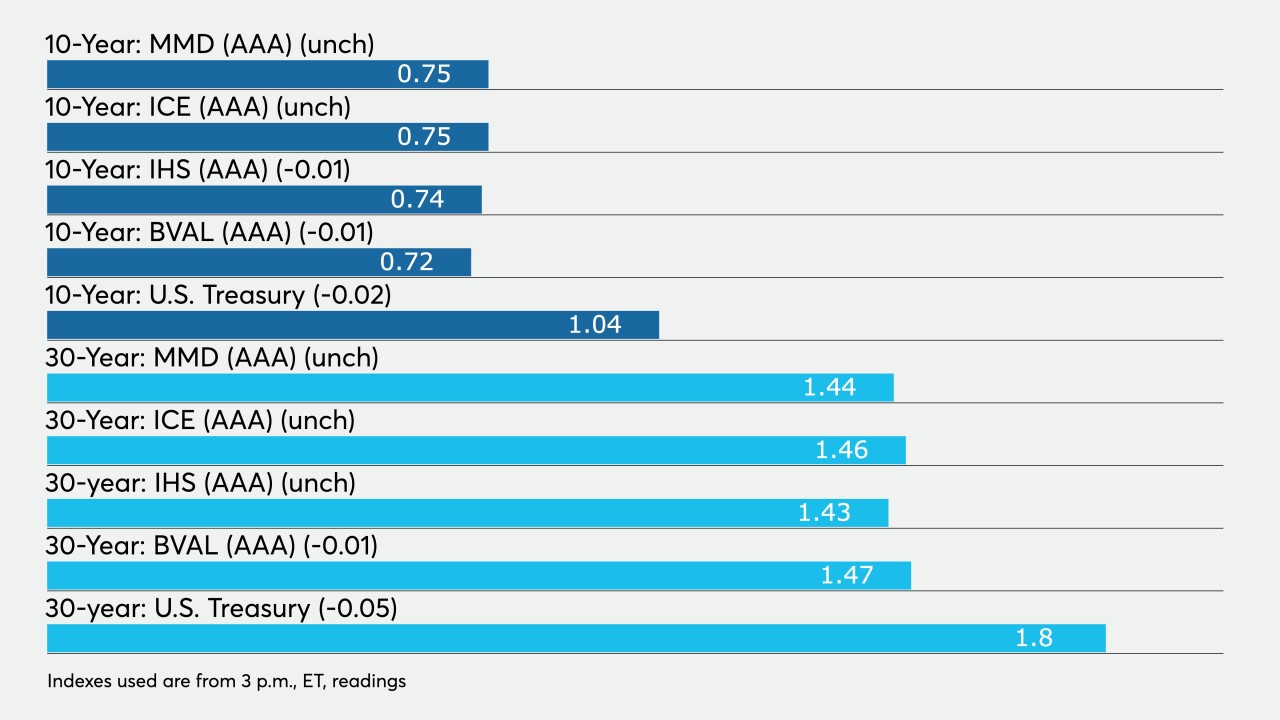
-
While no FOMC action on monetary policy is expected, markets are watching for how the Federal Reserve partners with the Biden administration and how it reacts to the 10-year Treasury yield rising from 0.52% on Aug. 4 to 1.15% on Jan. 14.
January 22 Keel Point
 -
Fed’s Rosengren calls Biden stimulus plan big yet ‘appropriate’
January 15
-
It’s premature to discuss reducing the amount of monetary-policy support for the U.S. economy while the pandemic is still raging, said Federal Reserve Bank of St. Louis President James Bullard.
January 12
-
Federal Reserve officials said that more fiscal support and the mass distribution of vaccines could lead to a strong U.S. economic recovery in the second half, setting the stage for a discussion of potential tapering of bond buying before year’s end.
January 12
-
Federal Reserve Bank of Richmond President Thomas Barkin says the U.S. could face a bumpy first six months but will be well supported by the rollout of COVID-19 vaccines and fiscal stimulus later in the year.
January 11
-
Transcripts of the Federal Reserve’s 2015 policy meetings show that then-Fed Chair Janet Yellen acknowledged that the Fed should sacrifice potential job gains in order to cut off the possibility of higher inflation.
January 8
-
Federal Reserve officials shouldn’t intervene to slow rising bond yields because that is expected to happen as the U.S. economy recovers, said Federal Reserve Bank of Dallas President Robert Kaplan.
January 8
-
It was inevitable that muni yields would need to rise somewhat as the UST 10-year broke above 1%, however participants said the supply/demand imbalance will keep munis from rising as quickly as Treasuries. More than $1 billion inflows reported.
January 7
-
FOMC members backed maintaining asset purchases, although “a couple” were “open” to “weighting purchases of Treasury securities toward longer maturities,” according to minutes released Wednesday.
January 6
-
Federal Reserve officials unanimously backed holding the pace of asset purchases steady when they met last month.
January 6
-
The rotational changes for the FOMC voters will be more centered, walking a more balanced line between hawks and doves, analysts believe.
 December 31
-
Another $900 billion of fiscal support would “absolutely” make a significant difference to the U.S. economy’s ability to endure COVID-19, but “challenging months” lie ahead, a top Federal Reserve official said.
December 21


